
For a jewelry brand, packaging is often the first physical touchpoint a customer experiences after placing an order. Before the jewelry is worn, admired, or given as a gift, the box creates an initial impression of quality and value.
That is why choosing an experienced custom jewelry box manufacturer can be an important part of building a successful jewelry business. A well-designed jewelry box can protect delicate products, reinforce brand identity, improve the unboxing experience, and help a jewelry collection stand out in a competitive market.
For jewelry brands, retailers, wholesalers, and private-label businesses, custom packaging also provides the opportunity to create a consistent visual identity across different product categories. Instead of using a generic box, businesses can develop packaging around their jewelry, target customers, and brand positioning.
What Is a Custom Jewelry Box?
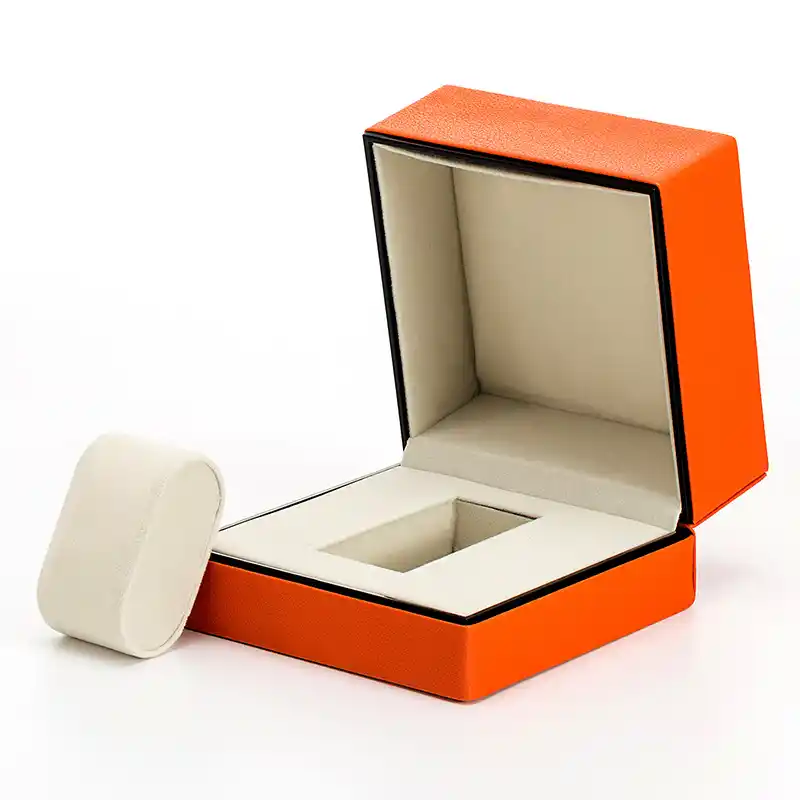
A custom jewelry box is packaging designed according to a brand’s specific requirements rather than being selected from a standard catalog.
Customization can involve almost every part of the product, including the box dimensions, structure, opening style, materials, colors, logo, interior insert, surface finish, and accessories.
For example, a ring box may require a narrow insert that securely holds a single ring. A necklace box may need a larger interior and a mechanism that keeps the chain organized. A jewelry set may require multiple compartments for earrings, rings, necklaces, or bracelets.
The exterior can also be customized to match the brand.
Depending on the desired positioning, a company may choose a rigid paper box, wooden jewelry box, PU leather case, velvet-covered box, or another combination of materials. Different structures and finishes can create completely different customer experiences.
A professional manufacturer should be able to evaluate these requirements and turn a concept into a practical production solution.
Why Custom Packaging Is Important for Jewelry Brands
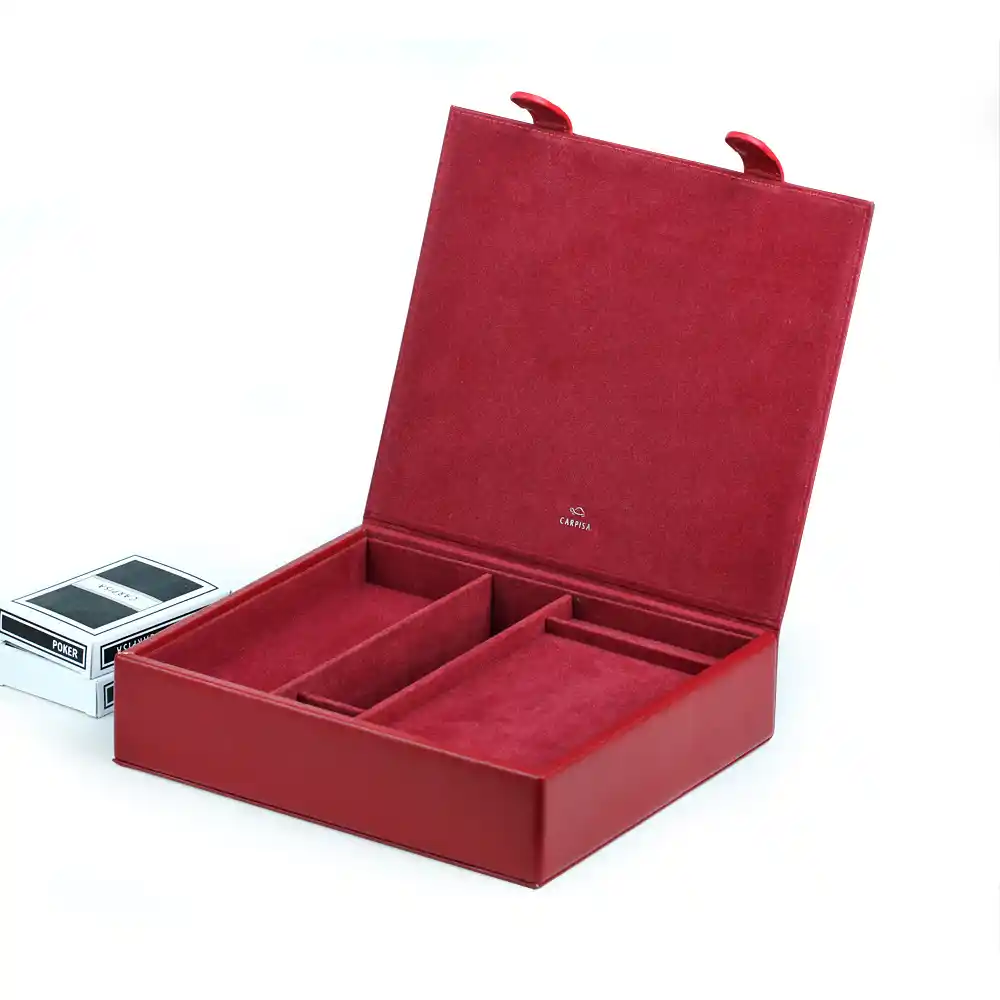
Jewelry is strongly connected with emotions, gifting, celebration, and personal identity. Packaging therefore has an important role beyond basic product protection.
A carefully designed jewelry box can communicate several things at once.
It can make a product feel more premium.
It can reinforce a recognizable brand identity.
It can provide a memorable unboxing experience.
It can make jewelry easier to store and display.
It can also improve the perceived value of the product.
For an online jewelry business, packaging is particularly important because customers cannot physically examine the jewelry before purchasing. The package becomes part of the experience that connects the digital purchase with the physical product.
A branded box with a carefully designed interior can help make the transition from online shopping to product ownership feel more special.
Choose the Right Jewelry Box Structure
The structure of a jewelry box should be determined by both the jewelry and the customer experience.
Different products require different packaging solutions.
Ring Boxes
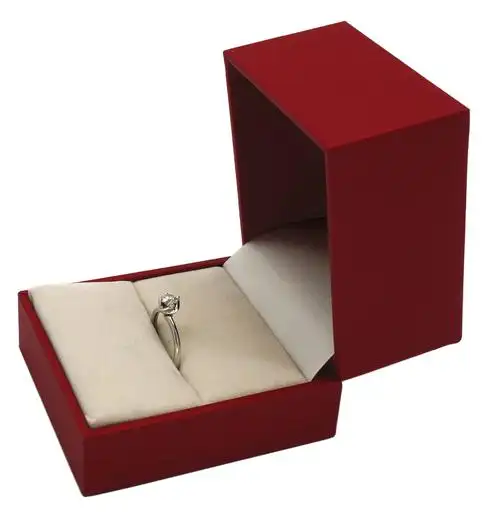
Ring boxes are typically compact and designed to hold one or more rings securely. The interior insert needs to keep the ring in position while providing an attractive presentation when the box is opened.
For engagement rings and other premium products, brands may choose rigid construction and soft interior materials to create a more luxurious presentation.
Necklace Boxes
Necklaces require additional attention because chains can become tangled or move around during transportation.
A suitable necklace box may include an internal holder, hooks, slots, or other structural elements that keep the jewelry organized.
The size of the box should also be proportional to the necklace and pendant. A box that is unnecessarily large can increase packaging and shipping costs, while one that is too small may compromise presentation or protection.
Earring Boxes
Earring packaging can be designed with dedicated slots or inserts that keep pairs together. The internal structure should make the earrings easy to remove while preventing unnecessary movement.
Bracelet Boxes
Bracelets often require longer or wider internal spaces. Depending on the bracelet design, the packaging can incorporate dedicated supports to maintain its shape and improve presentation.
Jewelry Set Boxes
Jewelry sets create an opportunity for more sophisticated packaging design. A single box can contain multiple jewelry pieces while maintaining an organized appearance.
A custom jewelry set box may include separate sections for rings, earrings, necklaces, and bracelets, creating a complete presentation for premium collections and gift sets.
Selecting Materials for Custom Jewelry Packaging
Material selection is one of the most important decisions in the development of a custom jewelry box.
The right material should match the brand’s desired appearance, product value, budget, durability requirements, and environmental goals.
Rigid paperboard is widely used for premium packaging because it offers a solid structure and provides many options for exterior wrapping and finishing.
Recycled paper and FSC-certified paperboard can be considered by brands that want packaging aligned with more environmentally conscious positioning.
Wood and bamboo can create a natural and substantial appearance. These materials may work particularly well for jewelry brands that emphasize craftsmanship, natural materials, heritage, or sustainability.
PU leather can provide a refined appearance and can be combined with different interior materials and structures.
Velvet, microfiber, linen, and other fabrics can be used for interiors or exterior coverings to create different textures and visual effects.
Incepto Jewel offers various material options for custom jewelry packaging, including rigid cardboard, recycled paper, FSC-certified paperboard, wood, bamboo, velvet, microfiber, PU leather, linen, and acrylic components, depending on project requirements.
The best choice is not necessarily the most expensive material. It is the material combination that supports the brand’s positioning while meeting practical production requirements.
Interior Design Is Just as Important as the Exterior
Many brands focus heavily on the outside of the box and overlook the interior.
However, the interior is where customers directly see the jewelry when they open the package.
The insert should hold the product securely and create an attractive presentation. It may also need to accommodate different jewelry sizes and shapes.
Common interior materials include velvet, microfiber, satin, and other soft-touch fabrics. The color can be matched to the brand or selected to create contrast with the jewelry.
For example, dark interiors can create a dramatic presentation for gold or silver jewelry, while neutral or light-colored interiors may produce a softer and more contemporary appearance.
The interior can also include multiple compartments, removable inserts, logo details, or other customized elements.
Branding Techniques for Jewelry Boxes
A custom jewelry box provides valuable space for brand identification.
A logo does not always need to be large to be effective. In many premium packaging designs, a small and carefully positioned logo can create a more sophisticated appearance.
Depending on the material and design, manufacturers may offer several branding techniques.
Hot foil stamping can be used to create metallic gold, silver, or other foil effects.
Embossing can raise the logo from the surface and create a tactile effect.
Debossing creates an impression below the surface.
UV printing can reproduce detailed graphics and colors.
Silk screen printing can provide clean and consistent branding on suitable surfaces.
The choice should depend on the material, logo design, desired appearance, production quantity, and budget.
A good jewelry box manufacturer should be able to recommend a suitable finishing technique instead of simply applying the same process to every project.
Custom Colors and Brand Consistency
Color is another important component of packaging design.
A jewelry brand may already have established colors for its website, logo, shopping bags, product cards, and retail displays. The jewelry box should ideally fit into the same visual system.
Consistency helps customers recognize a brand across different touchpoints.
When developing custom packaging, brands should consider the exterior color, interior color, logo color, ribbon or closure color, and any printed graphics as a complete system.
Color matching can also be important when a brand has strict visual guidelines. A professional packaging manufacturer should be able to discuss color specifications and provide samples before bulk production.
From Design Concept to Finished Jewelry Box
Developing a custom jewelry box usually involves several stages.
The first stage is requirement collection. The brand provides information about the jewelry, dimensions, quantity, materials, colors, logo, target price, and desired packaging style.
The manufacturer can then evaluate the structure and propose suitable materials and production methods.
Next comes design and sample development. Depending on the project, this may involve structural drawings, 3D visualization, material samples, and physical prototypes.
A physical sample is particularly useful because it allows the brand to check the actual size, opening experience, insert fit, colors, surface texture, and logo application.
Once the sample is approved, mass production can begin according to the confirmed specifications.
Quality inspection should take place throughout production rather than only after all boxes have been completed.
Why Sampling Matters Before Bulk Production
A sample gives a jewelry brand an opportunity to identify problems before investing in a large production run.
For example, a box may look perfect in a digital rendering but feel too large when physically handled. An insert may hold the jewelry securely but make it difficult to remove. A logo may look too subtle or too prominent. The chosen material may also feel different from what was expected.
These issues are much easier and less expensive to correct during the sample stage.
For this reason, brands should avoid approving mass production based solely on images or digital drawings when the packaging design is complex.
A professional custom jewelry box manufacturer can use sampling to validate the structure, materials, dimensions, finishing, and overall presentation before production.
Custom Jewelry Boxes for OEM and Private Label Businesses
OEM and private-label jewelry businesses often have specific packaging requirements.
A private-label brand may want packaging that looks completely unique while following an established brand identity. An OEM customer may provide technical specifications and expect the manufacturer to produce boxes according to those requirements.
In both cases, communication is critical.
The manufacturer needs accurate information about product dimensions, logo files, materials, color requirements, packaging quantities, and delivery expectations.
For larger projects, brands may also need multiple box sizes for different collections while maintaining the same overall visual identity.
A capable manufacturer should be able to manage these variations without compromising consistency.
How to Evaluate a Custom Jewelry Box Manufacturer
When comparing potential suppliers, price should not be the only consideration.
Look at the manufacturer’s experience with jewelry packaging, available materials, customization capabilities, sample process, production capacity, quality control, communication, and ability to support repeat orders.
It is also useful to determine whether the supplier can manufacture different types of jewelry boxes under one project.
Working with one experienced partner for ring boxes, necklace boxes, earring boxes, bracelet boxes, jewelry sets, and related packaging can make purchasing and quality management more efficient.
The supplier’s ability to scale is another consideration. A brand may start with a small order and later require significantly larger production volumes. Choosing a manufacturer capable of supporting that growth can reduce the need to change suppliers later.
Create Jewelry Packaging That Customers Remember
A jewelry box may only be opened for a few moments, but those moments can have a lasting impact on the customer’s perception of a brand.
The structure, material, color, logo, interior, and opening experience all contribute to that impression.
For this reason, custom jewelry packaging should be treated as part of the product experience rather than simply an additional shipping component.
Incepto Jewel provides custom jewelry box manufacturing for brands and businesses looking for tailored packaging solutions. Its capabilities include different box structures, material options, logo customization, OEM and private-label production, sample development, bulk manufacturing, quality inspection, and international order support.
Whether you are launching a new jewelry collection or upgrading the packaging of an established brand, working with the right jewelry box manufacturer can help transform a packaging idea into a finished product that protects your jewelry and strengthens your brand.
The best jewelry box is not simply the one that looks attractive. It is the one that fits the jewelry, reflects the brand, protects the product, meets production requirements, and creates an experience customers are happy to remember.
Get a Quote Now