The global jewelry market continues to create opportunities for brands that can offer distinctive designs, dependable quality, and a strong customer experience. For companies entering the fine jewelry sector, one of the most important decisions is choosing the right diamond bracelet manufacturer.
A professional manufacturing partner can help a jewelry business move from an initial idea to a finished bracelet ready for retail, wholesale, or online sales. This can include product development, CAD modeling, sample making, diamond selection, metal production, stone setting, polishing, quality inspection, packaging, and international shipping.
For jewelry brands, the ideal manufacturer is not simply a supplier that produces finished products. It is a production partner capable of understanding design requirements, maintaining consistent quality, meeting agreed delivery schedules, and adapting to changing market demand.
Incepto Jewel provides OEM, ODM, private label, wholesale, and bulk jewelry manufacturing services for businesses developing customized jewelry collections. Its production capabilities cover bracelet design, prototyping, manufacturing, quality control, customized packaging, and global delivery.
Why the Right Diamond Bracelet Manufacturer Matters
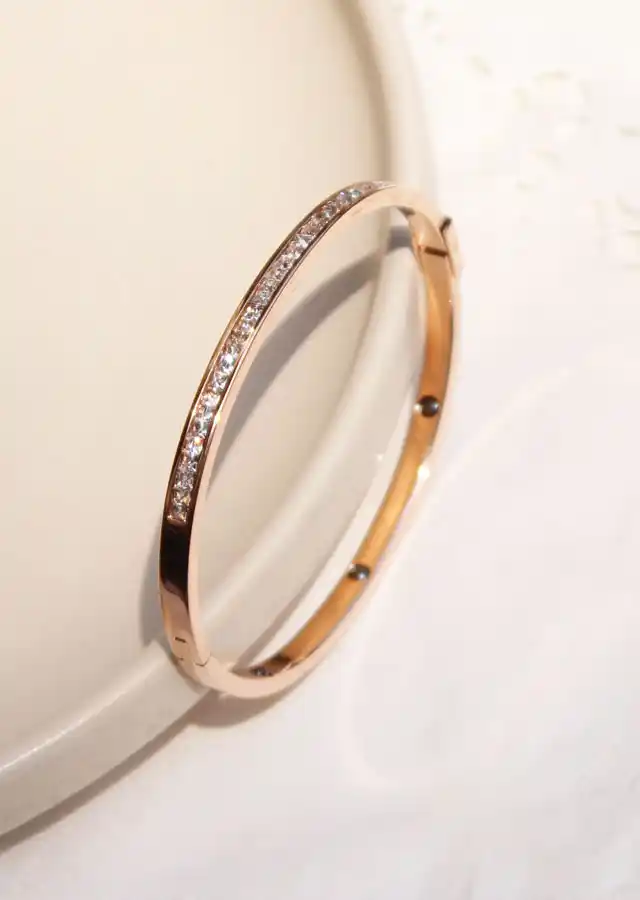
A diamond bracelet combines several elements that require precision. The metal must be properly formed and finished, diamonds need to be positioned accurately, clasps must function correctly, and the final product should maintain a consistent appearance from one piece to another.
For this reason, manufacturing quality directly affects the customer experience.
A bracelet that looks attractive in a product photograph but has inconsistent stone placement, rough finishing, or an unreliable clasp can create returns and damage a brand’s reputation.
By contrast, a dependable manufacturer can help a brand establish consistent product standards across samples, initial orders, and repeat production.
This becomes even more important when a business develops a signature bracelet design. Customers expect every reorder to maintain the same dimensions, materials, diamond arrangement, and finishing quality as the original approved sample.
Custom Diamond Bracelet Manufacturing
One of the biggest advantages of working with a specialized manufacturer is the ability to create customized designs.
Rather than selecting a standard bracelet from an existing catalog, brands can develop products according to their own specifications.
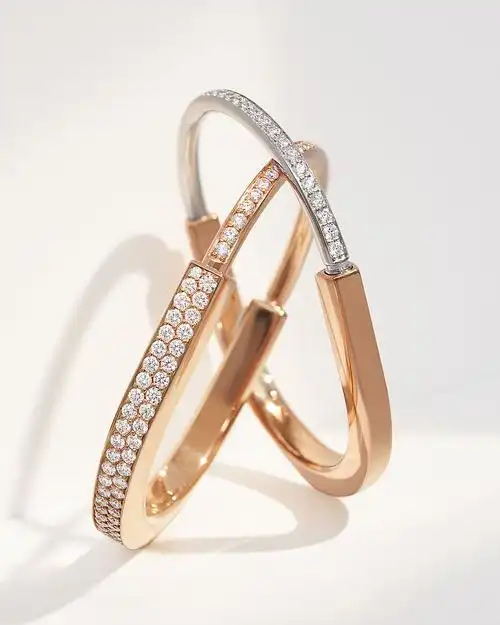
A custom diamond bracelet may include:
- A unique bracelet structure
- Custom diamond arrangement
- Different diamond sizes
- Natural or lab-grown diamonds
- 925 sterling silver
- 10K, 14K, or 18K gold
- Custom clasp designs
- Different surface finishes
- Laser-engraved logos
- Personalized dimensions
- Branded packaging
This approach allows businesses to create collections that are more closely aligned with their target customers.
For example, a minimalist jewelry brand may prefer a delicate bracelet with small diamonds and a refined profile. A luxury-focused company may choose a larger tennis bracelet with premium natural diamonds and a substantial precious-metal construction.
The manufacturing process should be flexible enough to support both concepts.
From Jewelry Concept to Production-Ready Design
Many jewelry businesses begin with an idea rather than a finished technical design.
A buyer may have a sketch, reference photograph, inspiration image, or basic description of the bracelet they want to create.
An experienced manufacturer can help translate that concept into a production-ready design.
Step 1: Discuss the Concept
The manufacturer first reviews the product idea and identifies important specifications.
These may include bracelet length, metal type, diamond characteristics, setting style, clasp construction, thickness, weight, and desired price range.
Step 2: Develop the CAD Model
For custom projects, 3D CAD allows the manufacturer and buyer to visualize the product before physical production.
CAD can be used to examine the bracelet’s proportions, stone placement, metal thickness, structural details, and overall appearance.
This stage can also identify potential manufacturing issues before a physical sample is produced.
Step 3: Produce a Sample
After the design is approved, a physical prototype can be manufactured.
The sample gives the buyer an opportunity to inspect the actual bracelet and request changes if necessary.
Step 4: Approve the Final Specifications
Once the sample meets the brand’s requirements, the final specifications can be confirmed for bulk production.
This creates a reference point for future manufacturing and helps maintain consistency.
Diamond Selection for Bracelet Production
Diamonds are one of the most important components of a diamond bracelet.
The appropriate diamond specification depends on the product’s intended market and price positioning.
Natural diamonds may be selected for traditional fine jewelry and luxury collections. Lab-grown diamonds provide another option for brands seeking a different price structure while retaining the visual characteristics associated with diamond jewelry.
When selecting diamonds for a bracelet, buyers may consider:
- Carat weight
- Cut
- Color
- Clarity
- Shape
- Matching consistency
- Total diamond weight
- Setting requirements
For multi-stone bracelets, matching can be particularly important because numerous stones are viewed together.
A professional manufacturer should be able to discuss the appropriate diamond specifications and coordinate stone selection according to the approved design.
Why Stone Setting Requires Specialized Skills
The appearance of a diamond bracelet depends heavily on the quality of its stone setting.
Even when the diamonds themselves are high quality, inconsistent setting can affect the appearance of the finished bracelet.
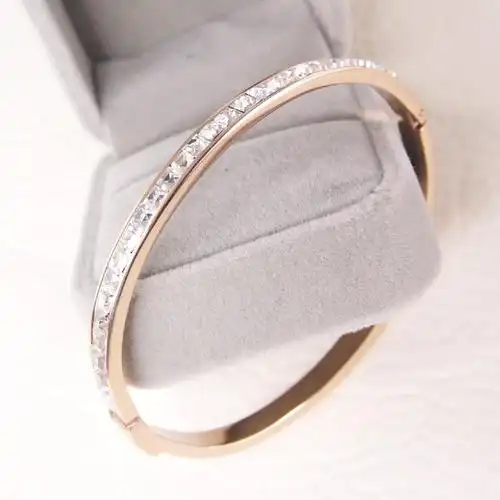
Depending on the design, different setting techniques can be used, including prong, bezel, channel, pavé, and other customized settings.
Each technique has different visual and structural characteristics.
For example, a tennis bracelet generally requires careful positioning of multiple diamonds so that the stones create a continuous visual line. The setting must also provide sufficient security for regular wear.
Experienced stone setters understand how to balance the visual requirements of the design with the structural requirements of the finished jewelry.
Quality Control Throughout Production
Quality control should not be limited to the final inspection.
A strong manufacturing process checks the product at multiple stages.
Material Inspection
Before production begins, the manufacturer should verify the agreed materials and specifications.
This may include precious-metal composition, gemstones, diamonds, clasps, chains, and other components.
Production Inspection
During manufacturing, technicians can monitor dimensions, casting quality, stone positioning, and structural details.
Identifying problems during production can reduce the risk of producing an entire batch with the same defect.
Stone Security Inspection
Each bracelet should be checked to ensure that diamonds and other stones are properly secured.
This is especially important for products containing multiple small stones.
Surface Finish Inspection
Polishing, plating, engraving, and other surface treatments should be examined for consistency.
The bracelet should have the expected finish without visible scratches, rough areas, or uneven treatment.
Final Inspection
Before shipment, finished products should be inspected against the approved specifications.
A complete inspection process can include dimensions, appearance, clasp function, stone security, metal finish, and packaging.
Incepto Jewel describes a quality-control process covering raw materials, dimensions, stone security, surface finishing, plating thickness, final appearance, and packaging.
Choosing Between OEM, ODM, and Private Label
Jewelry businesses have different manufacturing needs, so it is useful to understand the main production models.
OEM Jewelry Manufacturing
OEM is suitable when a brand already has its own product design or technical specifications.
The manufacturer produces the bracelet according to the buyer’s requirements.
This option provides a high level of control over the final product.
ODM Jewelry Manufacturing
ODM can be useful when a business wants support with product development.
The manufacturer may provide design expertise or existing development capabilities that can be adapted to the customer’s requirements.
This can reduce the amount of technical development required from the brand.
Private Label Jewelry
Private label manufacturing allows a business to sell jewelry under its own brand identity.
The manufacturer can produce the bracelet according to agreed specifications while supporting brand elements such as logo engraving and customized packaging.
Incepto Jewel offers OEM, ODM, and private label services, making it possible for different types of jewelry businesses to choose a production model that matches their development stage.
Diamond Bracelet Manufacturing for E-Commerce Brands
Online jewelry businesses often have different requirements from traditional retail companies.
An e-commerce brand may need smaller initial quantities, customized packaging, fast product development, professional product photography samples, and reliable repeat production.
For a new online store, a smaller initial order can be useful for testing customer demand.
If one design performs particularly well, the brand can then increase production.
This makes flexible manufacturing particularly valuable for Shopify stores, online jewelry retailers, marketplace sellers, and emerging direct-to-consumer brands.
A manufacturer that can support both small initial orders and larger repeat production can grow alongside the business.
How MOQ Affects Your Jewelry Business
Minimum order quantity is an important factor when selecting a manufacturer.
A high MOQ may create significant inventory risk for a new brand. If the product has not been tested in the market, ordering a large quantity may tie up capital and storage space.
A lower MOQ allows businesses to test products before committing to larger volumes.
Incepto Jewel currently promotes flexible low-MOQ bracelet manufacturing and lists a typical range of 30–50 pieces, depending on the project.
For established brands, larger quantities may provide additional production efficiencies and better unit economics.
The ideal MOQ therefore depends on the business model, sales forecast, product price, and inventory strategy.
Production Capacity and Scalability
A manufacturer should be able to support your business not only when orders are small but also when demand increases.
Consider a scenario where a new bracelet becomes a best seller after a successful launch.
If the factory has insufficient capacity, the brand may experience stock shortages precisely when customer demand is strongest.
For this reason, buyers should evaluate production capacity before establishing a long-term supplier relationship.
Incepto Jewel states that its bracelet manufacturing facility covers more than 5,000 square meters, employs more than 100 skilled workers, and has a production capacity exceeding 100,000 bracelets per month.
A production partner with scalable capacity can provide greater flexibility as a jewelry business expands.
Customized Jewelry Packaging
The bracelet itself is only part of the customer experience.
For branded jewelry businesses, packaging can reinforce the identity of the company and create a more professional presentation.
A manufacturer may be able to provide:
- Custom jewelry boxes
- Branded gift bags
- Product tags
- Care cards
- Instruction cards
- Logo engraving
- Retail packaging
When product and packaging are developed together, brands can create a more consistent presentation.
This is particularly useful for online businesses because packaging becomes part of the customer’s unboxing experience.
What Should You Ask a Diamond Bracelet Manufacturer?
Before placing an order, prepare a list of questions for the factory.
Ask about:
Materials: What metals and gemstones are available?
Diamonds: Can the manufacturer supply natural diamonds, lab-grown diamonds, or both?
Customization: Can the factory produce from sketches, CAD files, or reference samples?
Sampling: How does the prototype process work?
MOQ: What is the minimum quantity for custom production?
Production: What is the estimated lead time for samples and bulk orders?
Quality Control: What inspections are performed before shipment?
Branding: Can the factory provide logo engraving and private label packaging?
Documentation: What certificates and compliance documents can be supplied?
Shipping: Can the manufacturer arrange international delivery?
Clear answers to these questions can help buyers compare suppliers more effectively.
How to Build a Long-Term Manufacturing Relationship
The strongest supplier relationships are usually built through clear communication and consistent expectations.
Start with a detailed product specification. Make sure all important information is confirmed before production.
When reviewing samples, provide specific feedback rather than general comments. For example, instead of saying that the bracelet “looks different,” identify whether the issue concerns bracelet thickness, diamond spacing, polish, clasp size, or another measurable feature.
Once a design is approved, keep the final specifications and sample as a reference for future orders.
For repeat production, the manufacturer should be able to reproduce the product according to the approved standard.
Over time, this can make the development of additional collections more efficient because the manufacturer becomes familiar with the brand’s expectations.
Frequently Asked Questions
Can a diamond bracelet manufacturer make completely custom designs?
Yes. Depending on the manufacturer’s capabilities, custom bracelets can be developed from sketches, reference images, technical drawings, or CAD files.
What materials can be used for custom diamond bracelets?
Common choices include sterling silver and different gold purities. The exact materials available depend on the manufacturer and project requirements.
Are lab-grown diamonds available for custom bracelets?
Many jewelry manufacturers can produce bracelets using lab-grown diamonds. Buyers should confirm available specifications, documentation, and sourcing requirements before production.
Can I add my brand logo to the bracelet?
Yes. Private label manufacturers may offer laser engraving or other branding options, depending on the design.
What is a reasonable MOQ for a new jewelry brand?
There is no universal MOQ. Smaller quantities can be useful for testing new products, while larger orders may be appropriate for established brands. Incepto Jewel currently lists a typical bracelet MOQ of 30–50 pieces depending on project specifications.
How long does it take to manufacture a custom bracelet?
The timeline depends on design complexity, sampling, materials, order volume, and production scheduling. Incepto Jewel lists approximately 1–3 days for CAD design, 7–15 days for sample production, and 15–30 days for bulk production, although actual timing should be confirmed for each order.
Partner With Incepto Jewel for Custom Diamond Bracelet Manufacturing
A successful jewelry collection requires more than a good design. It requires a manufacturing partner that can consistently translate that design into a high-quality finished product.
From CAD development and prototyping to diamond setting, polishing, quality inspection, packaging, and international delivery, each stage contributes to the final customer experience.
For jewelry brands, wholesalers, retailers, and private label businesses, Incepto Jewel offers a complete manufacturing solution designed to support both new product development and ongoing production.
With OEM, ODM, private label, wholesale, and bulk manufacturing capabilities, the company can work with businesses at different stages of growth. Its manufacturing facility combines design and production capabilities with flexible MOQ options and scalable production capacity.
If you are planning a new diamond bracelet collection, launching a private label jewelry brand, or searching for a reliable long-term manufacturing partner, choosing a manufacturer with strong technical capabilities, quality-control procedures, and flexible production options can help turn your designs into commercially successful jewelry products.
Incepto Jewel — Custom Diamond Bracelet Manufacturing for Jewelry Brands, Wholesalers, Retailers, and Private Label Businesses.
