Finding the right diamond bracelet manufacturer is a critical decision for jewelry brands, wholesalers, retailers, private label companies, and online jewelry businesses. The factory you choose can directly influence product quality, production costs, development time, minimum order quantities, packaging, and the ability to scale your business.
A diamond bracelet may look simple from the customer’s perspective, but professional manufacturing requires precision at every stage. The diamonds must be positioned accurately, the metal needs to meet the agreed specifications, the bracelet must be comfortable to wear, the clasp should function reliably, and the final surface should have a consistent finish.
For businesses developing their own collections, manufacturing capability is equally important. A factory should be able to turn an idea, sketch, reference image, or CAD file into a production-ready product while maintaining consistent quality from the first sample to repeat orders.
Incepto Jewel provides OEM, ODM, private label, wholesale, and bulk bracelet manufacturing services for jewelry businesses. Its production capabilities cover design development, CAD modeling, sampling, material selection, stone setting, finishing, quality control, packaging, and international shipping.
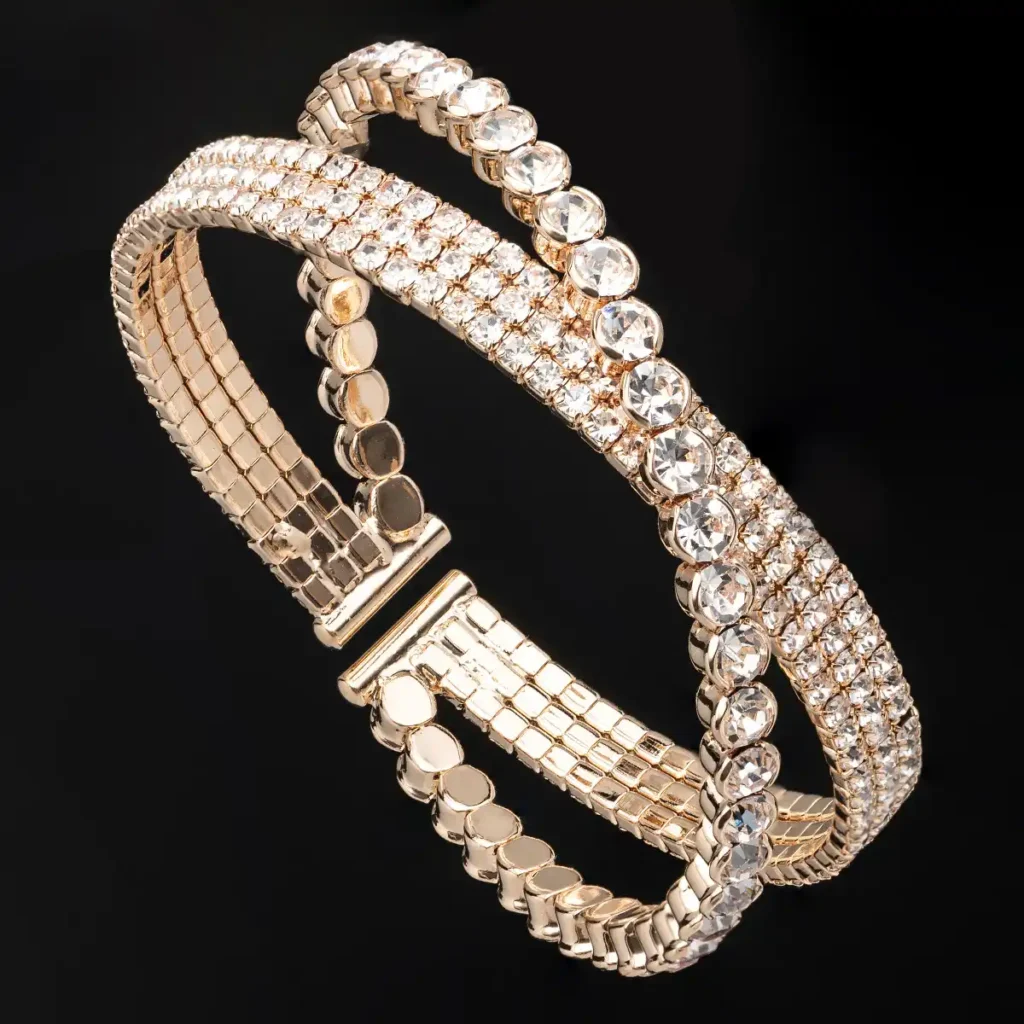
Why Manufacturer Selection Matters
The cheapest factory is not always the best manufacturing partner.
A low quotation may initially appear attractive, but if the manufacturer cannot maintain consistent quality, communicate technical details clearly, or meet delivery requirements, the actual business cost can become much higher.
Jewelry brands may face:
- Product returns
- Customer complaints
- Damaged reputation
- Delayed product launches
- Inconsistent repeat orders
- Excess inventory
- Emergency production costs
A reliable manufacturer should therefore be evaluated as a long-term business partner rather than simply a supplier.
The right factory should understand the technical requirements of diamond jewelry and provide a production process that is clear from the initial concept to the final shipment.
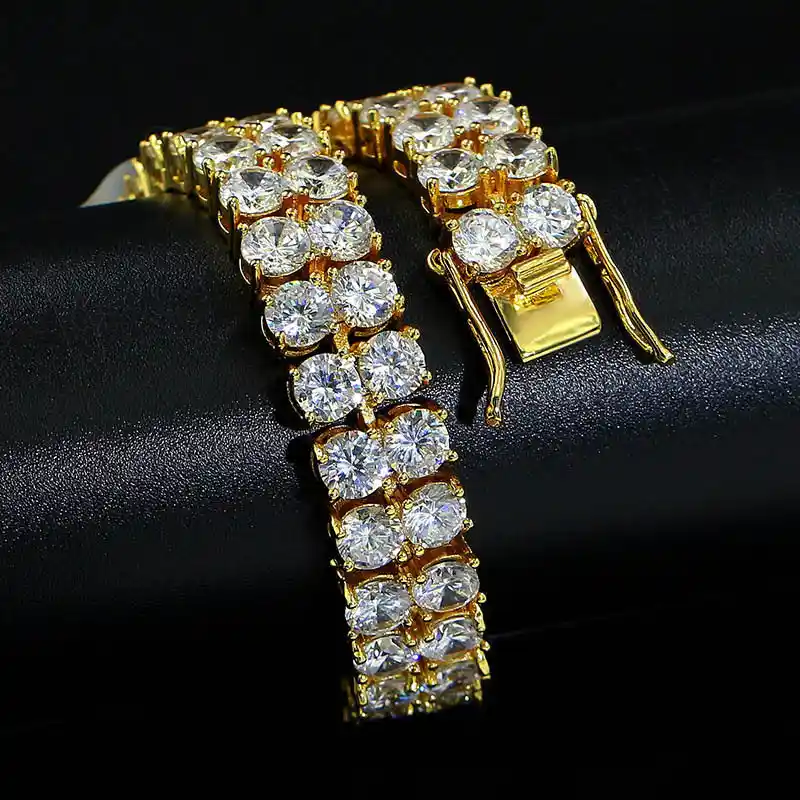
1. Check the Factory’s Jewelry Manufacturing Experience
Experience is one of the first things a buyer should investigate.
A manufacturer that primarily produces simple fashion accessories may not have the same capabilities as a factory specializing in fine jewelry and diamond bracelets.
Ask whether the manufacturer has experience with:
- Tennis bracelets
- Diamond chain bracelets
- Bangle bracelets
- Custom gemstone bracelets
- Gold bracelets
- Sterling silver bracelets
- Private label jewelry
- OEM jewelry
- ODM jewelry
Experience with similar products means the manufacturer is more likely to understand issues involving stone placement, bracelet flexibility, clasp construction, metal thickness, and finishing.
A manufacturer should also be able to explain how it handles complex custom designs rather than simply showing a catalog of finished products.
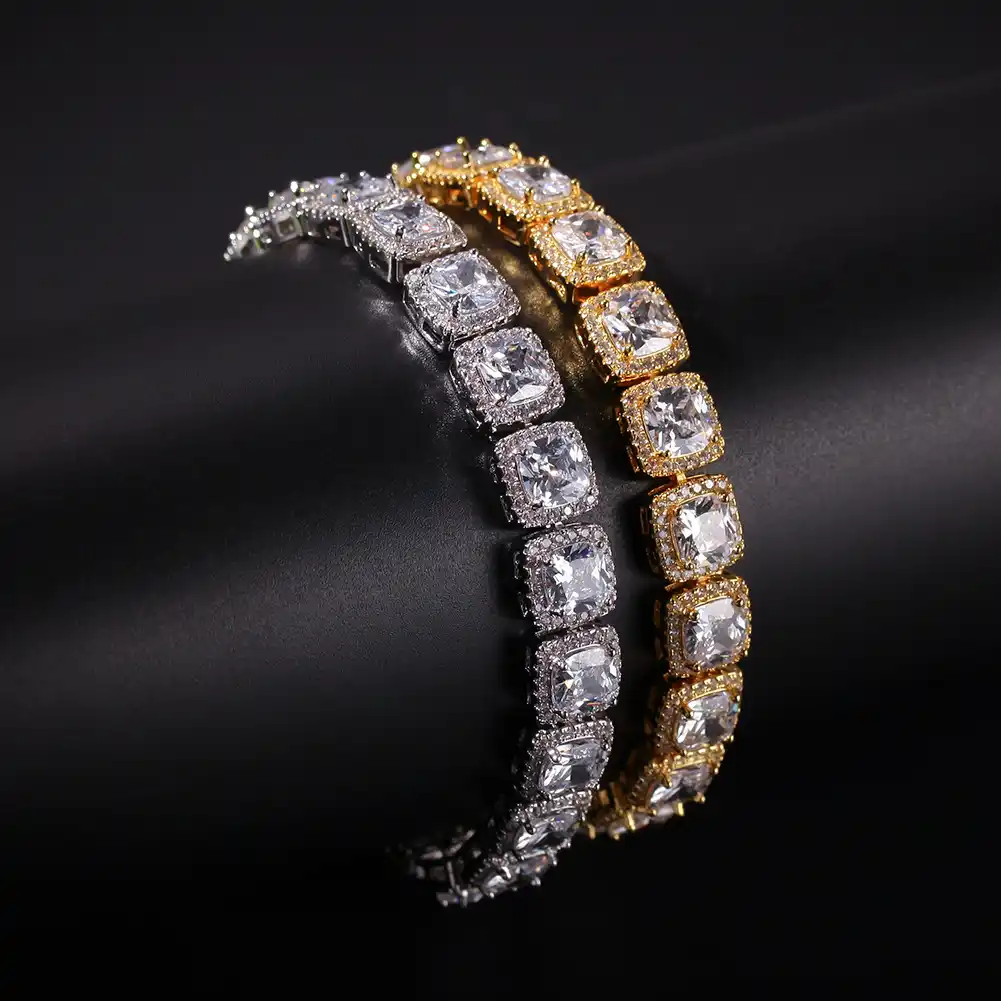
2. Evaluate Custom Design Capabilities
If you want a unique jewelry collection, customization should be a major consideration.
A professional manufacturer should be able to work with different forms of design information.
This may include:
- Hand-drawn sketches
- Product photographs
- Reference jewelry
- Technical drawings
- 3D CAD files
- Measurements
- Written specifications
The factory should then be able to determine whether the proposed design is practical for manufacturing.
This is especially important when a brand wants to create a completely original diamond bracelet.
A design may look attractive visually but contain structural problems that become obvious only during production.
An experienced manufacturer can suggest practical adjustments before the prototype stage.
3. Look for 3D CAD Development
3D CAD is an important part of modern jewelry manufacturing.
It allows manufacturers and brands to review the design digitally before creating a physical sample.
A CAD model can define the exact structure of a bracelet, including:
- Overall dimensions
- Bracelet thickness
- Link size
- Diamond positions
- Setting structure
- Clasp components
- Logo placement
- Connection points
CAD also makes communication easier.
Instead of relying only on written descriptions, the buyer and manufacturer can review the same digital model.
This reduces the risk of misunderstandings about dimensions or proportions.
Incepto Jewel includes 3D CAD design within its bracelet manufacturing process, supporting custom product development for jewelry businesses.
4. Ask for a Physical Sample
Never rely only on digital images when developing a new bracelet.
A physical prototype provides an opportunity to evaluate the actual product before placing a bulk order.
When the sample arrives, examine it carefully.
Check the bracelet from several perspectives.
Appearance
Does the finished product look like the approved design?
Comfort
Does it sit comfortably on the wrist?
Weight
Is the weight appropriate for the target customer?
Flexibility
Does the bracelet move naturally?
Clasp
Is the clasp easy to operate while remaining secure?
Diamonds
Are the stones positioned consistently?
Surface
Is the polishing or plating uniform?
Branding
Is the logo clear and correctly positioned?
If changes are required, make them before approving the sample for mass production.
5. Compare Available Materials
Different jewelry businesses have different material requirements.
A good manufacturer should provide enough material flexibility to support multiple product lines.
Incepto Jewel lists several bracelet materials, including:
- 925 sterling silver
- 10K gold
- 14K gold
- 18K gold
- Brass
- Stainless steel
The appropriate material depends on the design, target customer, price range, and product positioning.
For example, sterling silver may work well for an accessible fine jewelry collection, while 14K or 18K gold may be more appropriate for premium products.
A brand should decide on the material before finalizing the product quotation because metal choice can significantly affect the final cost.
6. Understand Diamond Options
The diamonds used in a bracelet should match the brand’s product strategy.
Natural diamonds remain a traditional choice for fine jewelry.
Lab-grown diamonds provide another option for brands that want to develop products with different pricing structures.
Incepto Jewel lists both natural diamonds and lab-grown diamonds among its bracelet manufacturing materials.
Other gemstone options listed by the manufacturer include moissanite, cubic zirconia, and natural gemstones.
This flexibility can help a brand create multiple product categories.
For example, one collection could focus on natural diamond luxury bracelets, while another could offer lab-grown diamond designs at a different price level.
7. Pay Attention to Stone Setting
Stone setting is one of the most important manufacturing processes for diamond bracelets.
A bracelet may contain dozens or even hundreds of individual stones depending on the design.
Each stone needs to be positioned correctly and held securely.
Different designs may use:
- Prong settings
- Bezel settings
- Channel settings
- Pavé settings
- Bar settings
The setting style affects the appearance, flexibility, maintenance, and overall structure of the bracelet.
For a tennis bracelet, consistency is particularly important.
The diamonds should form a visually continuous line, with the stones appearing evenly aligned around the wrist.
A manufacturer with precision stone-setting capabilities can help achieve this consistency.
8. Review the Quality-Control Process
A factory should be able to explain how it checks products before shipment.
Quality control should not happen only at the final stage.
It can involve multiple checkpoints throughout manufacturing.
These may include:
- Raw material inspection
- Dimension checks
- Stone-setting inspection
- Surface inspection
- Plating inspection
- Final product inspection
- Packaging inspection
Incepto Jewel describes a multi-stage inspection system that includes raw materials, dimensions, stone security, surface finishing, plating thickness, final appearance, and packaging.
This type of structured process can help identify potential problems before products reach the customer.
9. Examine the Factory’s Production Capacity
Production capacity becomes especially important when a brand grows.
A new business may initially need only a small batch.
However, if one bracelet becomes a bestseller, the business may suddenly need much larger quantities.
The manufacturer should have enough production capacity to handle this increase.
Incepto Jewel states that its bracelet factory has more than 5,000 square meters of production space, over 100 skilled workers, and monthly capacity exceeding 100,000 bracelets.
Scalable capacity allows brands to move from product testing to larger wholesale or recurring orders without necessarily changing manufacturing partners.
10. Consider MOQ Carefully
Minimum order quantity can have a major effect on inventory risk.
A large MOQ may make sense for an established wholesaler with predictable demand, but it can be challenging for a startup launching its first collection.
A lower MOQ allows a company to test products before making a larger investment.
Incepto Jewel lists a typical bracelet MOQ of 30–50 pieces depending on the project.
For a new jewelry brand, this can provide an opportunity to launch several designs in smaller quantities.
The brand can then identify which products perform best before increasing production.
11. Ask About Production Lead Times
Time is another important factor when choosing a manufacturer.
A delayed shipment can affect a product launch, seasonal collection, promotional campaign, or wholesale commitment.
Before placing an order, ask the manufacturer for separate timelines for:
- CAD design
- Sample production
- Design revisions
- Material preparation
- Bulk production
- Quality inspection
- Packaging
- Shipping
Incepto Jewel lists approximately 1–3 days for CAD design, 7–15 days for sample production, and 15–30 days for bulk production.
Actual timelines can vary depending on the product and order, so businesses should confirm the schedule for their specific project.
12. Check Private Label Capabilities
For brands selling under their own name, private label support can be extremely valuable.
A manufacturer should be able to integrate branding into the product and packaging.
Possible options include:
- Logo engraving
- Custom clasps
- Branded jewelry boxes
- Gift bags
- Product tags
- Care cards
- Instruction cards
- Retail packaging
Incepto Jewel offers private label bracelet manufacturing with custom logo engraving and branded packaging options.
This means the factory can support more than the physical bracelet itself.
13. Evaluate OEM and ODM Services
Different jewelry businesses need different levels of manufacturing support.
OEM
OEM is appropriate when the brand already has a specific design and wants the factory to manufacture it.
The customer generally controls the product specifications.
ODM
ODM can be useful when the business needs assistance with design development.
The manufacturer can contribute design expertise and product-development support.
Private Label
Private label focuses on creating products that carry the customer’s own brand identity.
A company may use custom products, existing designs, or a combination of both.
Choosing the appropriate model depends on how much design and product-development capability the business already has internally.
14. Consider Packaging and Presentation
A finished bracelet needs suitable packaging before it can be sold.
Professional packaging can include:
- Jewelry boxes
- Gift bags
- Product cards
- Tags
- Care instructions
- Branded inserts
Packaging can be particularly important for online stores.
Customers often form their first physical impression of an online jewelry brand when opening the package.
A consistent presentation can make the product feel more professional and reinforce the brand’s positioning.
15. Ask About International Shipping
If your business sells internationally, the manufacturing partner should understand cross-border delivery.
Important considerations include:
- Export experience
- Shipping methods
- Packaging
- Customs documentation
- Delivery destinations
- Tracking
- Insurance requirements
Incepto Jewel states that it serves customers in more than 50 countries and supports international logistics and customs documentation.
For international buyers, this experience can simplify the transition from production to delivery.
How to Compare Two Diamond Bracelet Manufacturers
Suppose you have received quotations from two factories.
Do not compare only the unit price.
Instead, create a broader comparison.
Consider:
| Factor | Manufacturer A | Manufacturer B |
|---|---|---|
| Custom CAD | Yes/No | Yes/No |
| Sample production | Yes/No | Yes/No |
| MOQ | — | — |
| Diamond options | — | — |
| Metal options | — | — |
| Stone setting | — | — |
| Quality inspection | — | — |
| Logo engraving | — | — |
| Custom packaging | — | — |
| Production capacity | — | — |
| Lead time | — | — |
| International shipping | — | — |
This makes it easier to evaluate the total value of each supplier.
A manufacturer with a slightly higher unit price may actually be more cost-effective if it provides better quality control, lower MOQ, faster development, and more reliable production.
What Information Should You Send for a Quotation?
A detailed inquiry can help a manufacturer provide a more accurate quotation.
Include:
Product type: For example, tennis bracelet, chain bracelet, bangle, or custom diamond bracelet.
Metal: Specify sterling silver, 10K, 14K, 18K, or another material.
Diamond: State whether you want natural or lab-grown diamonds and provide approximate specifications.
Size: Include bracelet length, width, and thickness if known.
Quantity: Provide both sample and expected bulk quantities.
Branding: Explain logo engraving and packaging requirements.
Reference: Attach sketches, photographs, CAD files, or existing samples.
Destination: Provide the country where the finished products will be shipped.
The more information you provide, the easier it is for the manufacturer to evaluate production requirements.
Building a Long-Term Relationship With Your Manufacturer
A strong manufacturing relationship can become an important competitive advantage.
Once a factory understands your product specifications, preferred materials, quality standards, packaging requirements, and communication style, future orders can become more efficient.
This is especially valuable for brands with recurring collections.
The manufacturer can maintain production references for successful products and use them when creating repeat orders.
Over time, the partnership can expand from one bracelet to a complete jewelry collection.
A brand may eventually develop matching:
- Rings
- Necklaces
- Earrings
- Pendants
- Bangles
- Other gemstone jewelry
A manufacturer with broad capabilities can potentially support this expansion.
Frequently Asked Questions
What should I look for in a diamond bracelet manufacturer?
Look for manufacturing experience, customization capabilities, material options, reliable stone setting, quality control, flexible MOQ, production capacity, private label support, clear communication, and international shipping experience.
Can a manufacturer produce my original bracelet design?
Yes. A professional custom manufacturer can work from sketches, CAD files, technical drawings, reference samples, or detailed specifications.
Can I choose natural or lab-grown diamonds?
Yes. Both options can be used for bracelet production depending on the manufacturer’s capabilities and your product specifications.
What is a reasonable MOQ for a new jewelry brand?
A smaller MOQ can reduce inventory risk when testing new products. Incepto Jewel lists a typical bracelet MOQ of 30–50 pieces depending on project requirements.
How long does it take to produce a custom bracelet?
Timelines vary by project. Incepto Jewel lists approximately 1–3 days for CAD design, 7–15 days for sample production, and 15–30 days for bulk production.
Can my bracelet include custom branding?
Yes. Private label manufacturing can include logo engraving and customized packaging.
Can the same factory handle small and large orders?
A manufacturer with scalable capacity can support both product testing and larger commercial orders. Incepto Jewel states that its facility can produce more than 100,000 bracelets per month.
Choose a Manufacturing Partner, Not Just a Supplier
Selecting a diamond bracelet manufacturer should be approached as a long-term business decision.
The ideal partner should be capable of handling the complete journey from product concept to finished jewelry. This includes CAD development, prototyping, material selection, diamond setting, polishing, quality inspection, branding, packaging, and shipping.
For startups, private label businesses, jewelry brands, wholesalers, retailers, and online stores, flexible manufacturing can make it easier to test new products, control inventory, build a distinctive collection, and scale successful designs.
Incepto Jewel provides OEM, ODM, private label, wholesale, and bulk bracelet manufacturing services, with capabilities covering custom design, 3D CAD, CNC processing, lost-wax casting, precision stone setting, polishing, laser engraving, quality inspection, customized packaging, and global delivery.
Whether you are sourcing your first collection or looking for a long-term production partner for an established jewelry business, choosing a manufacturer with strong technical capabilities, flexible production options, and consistent quality standards can help create a more reliable jewelry supply chain.
Incepto Jewel — Custom Diamond Bracelet Manufacturer for Jewelry Brands, Private Label Businesses, Wholesalers, and Retailers.
