The global jewelry market is becoming increasingly competitive, and customers are looking for more than standard products. They want jewelry that feels personal, distinctive, and meaningful. For jewelry brands, retailers, wholesalers, and e-commerce businesses, working with a reliable custom diamond ring manufacturer can be an effective way to create unique products while maintaining control over quality, design, and production costs.
Custom diamond rings are particularly valuable because they can be designed for different customer occasions, including engagements, weddings, anniversaries, birthdays, and other important milestones. A professional manufacturing partner can turn an initial concept, sketch, or reference image into a production-ready piece of jewelry.
For brands developing their own collections, OEM and private label manufacturing can also provide greater flexibility than purchasing generic ready-made products. This article explains how custom diamond ring manufacturing works, what businesses should consider when choosing a supplier, and how OEM and private label production can support long-term jewelry brand growth.
What Is a Custom Diamond Ring Manufacturer?
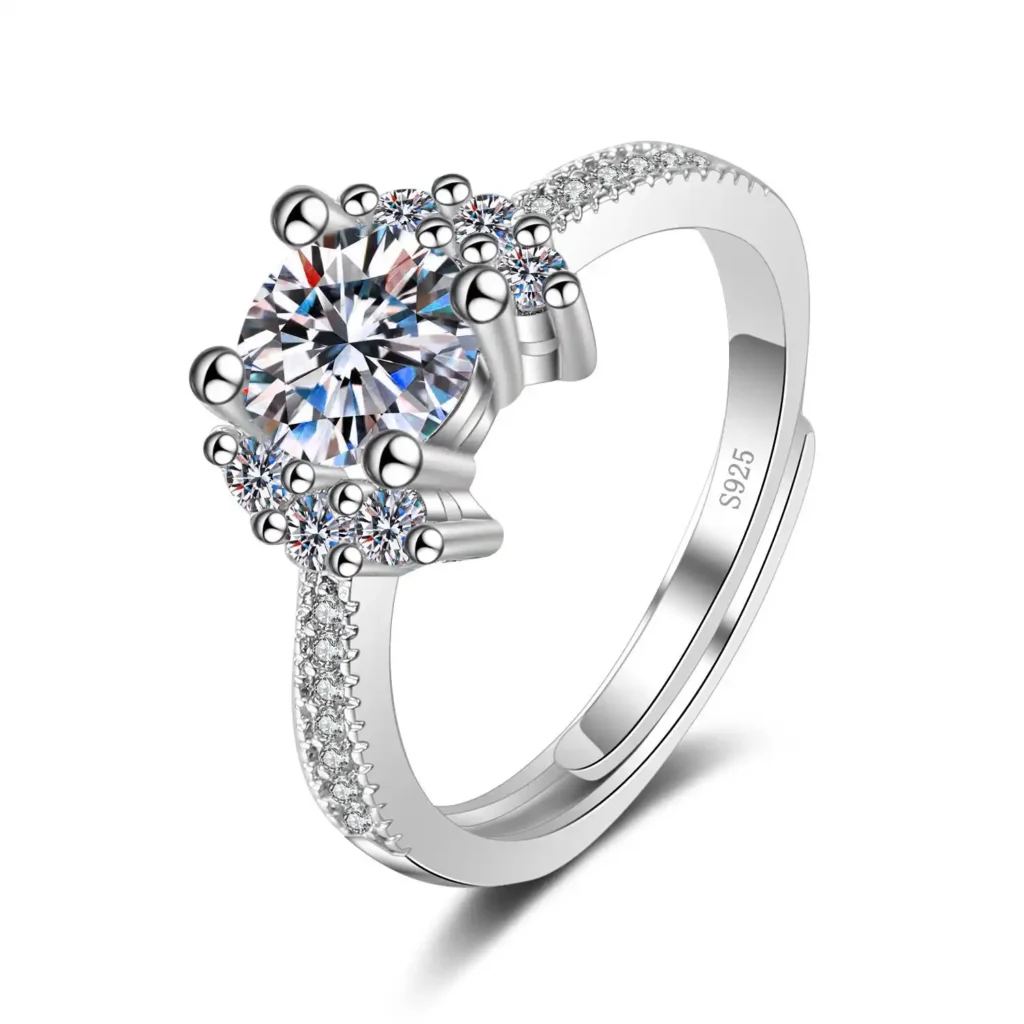
A custom diamond ring manufacturer specializes in producing diamond rings according to a customer’s specific requirements rather than simply selling standard designs.
A buyer may provide a drawing, CAD file, photograph, physical sample, or even a simple idea. The manufacturer then works through the technical and production requirements to create the final product.
Depending on the project, customization may involve:
- Ring shape and structure
- Diamond size and shape
- Diamond setting style
- Metal type
- Metal color
- Ring dimensions
- Surface finishing
- Engraving
- Gemstone combinations
- Brand logo
- Packaging
This makes custom manufacturing particularly useful for jewelry companies that want to differentiate themselves from competitors.
Instead of selling the same ring designs available from multiple suppliers, a brand can develop a collection with its own visual identity.
Why Custom Diamond Rings Are Important for Jewelry Brands
Customization can help jewelry brands build a stronger relationship with their customers.
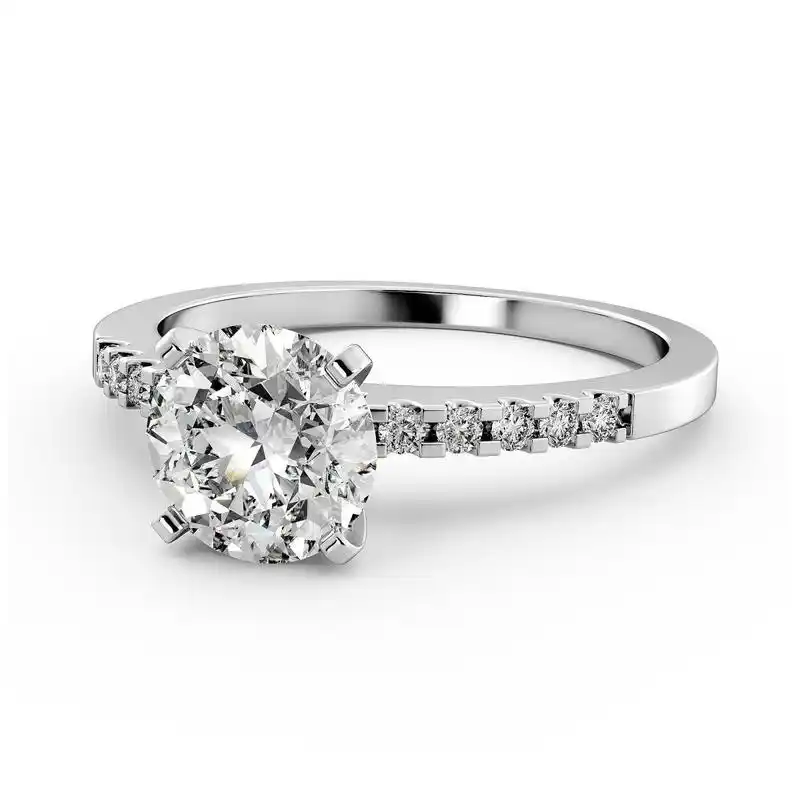
An engagement ring, for example, is not simply another fashion accessory. Customers often want a design that reflects their personality and relationship. A ring featuring a distinctive setting, specific diamond shape, meaningful engraving, or unusual band design can feel much more personal than a mass-market product.
For jewelry companies, custom products can also create opportunities for higher perceived value.
A unique design is harder for competitors to compare directly on price. This allows brands to focus on craftsmanship, design, materials, personalization, and customer experience instead of competing solely on cost.
A custom diamond ring manufacturer can therefore become an important part of a brand’s product strategy.
OEM Diamond Ring Manufacturing
OEM manufacturing is one of the most practical models for jewelry companies that already have product concepts or designs.
In an OEM relationship, the brand provides its requirements and the manufacturer produces the jewelry according to the approved specifications.
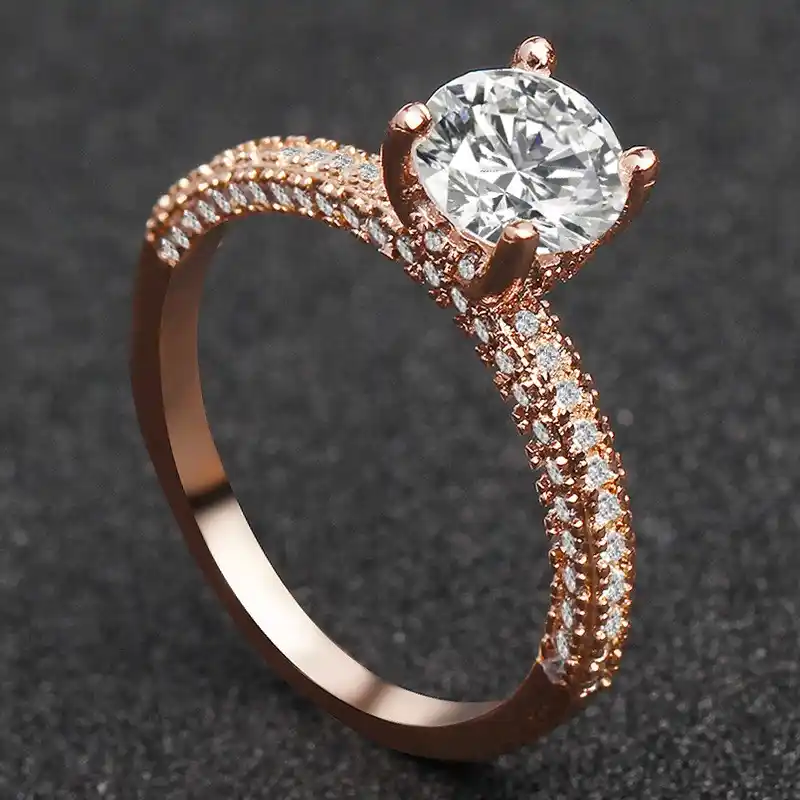
The process may include CAD development, prototyping, material selection, diamond sourcing, casting, stone setting, polishing, inspection, and packaging.
For a jewelry brand, this means there is no need to build a complete manufacturing operation internally.
Instead, the brand can focus its resources on:
- Product positioning
- Branding
- Marketing
- E-commerce
- Customer acquisition
- Retail distribution
- Sales
- Product photography
- Customer service
The manufacturing partner handles the production side.
This model is especially useful for startups and growing jewelry businesses that want to launch original collections without investing heavily in factory equipment and production infrastructure.
Private Label Diamond Ring Manufacturing
Private label manufacturing takes customization one step further by allowing a business to sell jewelry under its own brand identity.
A private label diamond ring manufacturer can produce rings based on an agreed design while also supporting branded details such as logos, packaging, engraving, and presentation.
For example, an online jewelry brand may develop a signature engagement ring collection and manufacture the pieces through a professional factory. The finished rings can then be sold under the brand’s own name.
Private label production can help create a consistent brand experience across multiple products.
This consistency matters because customers evaluate more than the jewelry itself. They also notice the packaging, logo, presentation, product information, and overall buying experience.
Incepto Jewel provides OEM, private label, and custom jewelry manufacturing services, allowing jewelry businesses to develop products according to their own requirements. The company’s manufacturing services also emphasize flexible MOQ and factory-direct production.
How Does Custom Diamond Ring Manufacturing Work?
A successful custom ring project usually follows a structured production process.
1. Share Your Design Requirements
The first step is to communicate your concept to the manufacturer.
You can provide a sketch, reference photograph, CAD file, technical drawing, or existing sample.
At this stage, it is useful to provide as much information as possible about:
- Ring size
- Metal
- Diamond type
- Diamond shape
- Diamond size
- Setting style
- Finish
- Engraving
- Quantity
- Target price
Clear information at the beginning can reduce unnecessary revisions later.
2. CAD Design and Engineering
If you do not already have a production-ready CAD file, the manufacturer can create one based on your concept.
CAD technology allows the factory and buyer to examine the ring digitally before manufacturing.
Important structural details can be evaluated, including band thickness, stone position, prong design, setting height, and overall proportions.
This stage is particularly important for complicated diamond rings because the appearance of a design is only one consideration. The finished ring must also be structurally suitable for manufacturing and everyday wear.
3. Sample Production
After the CAD design is approved, the manufacturer can create a prototype.
The sample allows the buyer to evaluate the actual physical product.
You can check:
- Ring proportions
- Diamond placement
- Surface finishing
- Overall appearance
- Wearing comfort
- Setting structure
- Engraving
- Color and finish
If changes are required, the CAD design can be adjusted before bulk manufacturing begins.
4. Material and Diamond Confirmation
Once the design has been approved, the manufacturer confirms the production materials.
Common choices include 14K and 18K gold, as well as different gold colors and other jewelry metals.
Diamond selection is equally important. Depending on the product positioning and target market, brands may choose natural diamonds or lab-grown diamonds.
Different diamond shapes can also create very different visual effects.
Popular choices include:
- Round
- Oval
- Princess
- Emerald
- Cushion
- Pear
- Marquise
- Radiant
- Asscher
The best choice depends on the design and target customer.
5. Bulk Production
After approval, the manufacturer begins mass production.
Depending on the design, production may involve casting, CNC or precision machining, polishing, stone setting, engraving, cleaning, and final assembly.
A reliable manufacturing process should maintain consistency between the approved sample and every production unit.
6. Quality Inspection
Quality control should take place throughout production rather than only at the final stage.
The manufacturer should inspect the finished rings for factors such as dimensions, surface quality, diamond security, setting accuracy, polishing, and overall appearance.
For branded jewelry collections, consistency is especially important because customers expect every product to meet the same standard.
Choosing the Right Diamond Ring Factory
Selecting a factory is one of the most important parts of the sourcing process.
Before placing a large order, jewelry businesses should evaluate several areas.
Manufacturing Capabilities
Does the factory produce the type of jewelry you need?
A manufacturer may specialize in simple jewelry while another may have extensive experience with complex diamond settings and customized designs.
Ask about previous production experience and available manufacturing capabilities.
Design Support
If your business frequently develops new collections, CAD and product development support can save considerable time.
A manufacturer that understands both aesthetics and production engineering can help turn creative concepts into commercially viable products.
MOQ Flexibility
Minimum order quantity is particularly important for startups and smaller jewelry brands.
Flexible MOQ allows businesses to test designs before committing to large quantities.
A smaller initial order can help a company identify its best-selling products and reduce inventory risk.
Quality Control
Ask how the manufacturer handles quality inspection.
Important questions include:
- Is each ring inspected?
- How are diamonds checked?
- How is stone security tested?
- How are dimensions verified?
- Is the final product compared with the approved sample?
- How are defective products handled?
A clear quality-control process can significantly reduce sourcing risks.
Communication
Communication is often overlooked when selecting a manufacturer.
However, custom jewelry production involves many details. Poor communication can result in incorrect materials, wrong dimensions, unsuitable stones, or packaging problems.
A professional supplier should communicate clearly about product specifications, sampling, production schedules, costs, and shipping.
Natural Diamonds vs. Lab-Grown Diamonds
Today’s jewelry businesses can choose between natural and lab-grown diamonds for many product categories.
Natural diamonds are formed through geological processes over extremely long periods and have traditionally been associated with luxury and rarity.
Lab-grown diamonds are created using advanced technological processes and have essentially the same chemical composition and crystal structure as natural diamonds.
For jewelry brands, the decision depends on their target market and positioning.
A premium brand may emphasize natural diamonds, while another business may focus on the value proposition of lab-grown diamonds.
Offering both options can allow a manufacturer to support multiple collections and price segments.
For brands developing custom diamond rings, discussing diamond options with the manufacturer early in the design process is important because stone dimensions can affect the setting and overall proportions of the ring.
Custom Engagement Ring Manufacturing
Engagement rings are one of the most important applications for custom diamond ring manufacturing.
Popular engagement ring designs include:
Solitaire Rings
A solitaire ring features a central diamond and a relatively simple band. Because the center stone is the visual focus, the setting needs to be carefully designed.
Halo Rings
Halo designs surround the center diamond with smaller stones. This can create a larger visual appearance and add additional brilliance.
Three-Stone Rings
Three-stone rings typically use a center diamond with two additional stones. The design can provide a meaningful visual structure and offers considerable customization possibilities.
Pavé Rings
Pavé settings use multiple small diamonds set closely together along part of the band or surrounding area.
Vintage-Inspired Rings
Vintage-style designs can incorporate detailed metalwork, milgrain finishes, engraved elements, or distinctive diamond arrangements.
A capable custom engagement ring manufacturer should be able to produce different styles while maintaining consistent quality.
Customization Beyond the Ring
For a jewelry brand, customization does not have to stop at the product.
Branding can also be incorporated into packaging and customer presentation.
Possible options include:
- Custom jewelry boxes
- Logo engraving
- Branded pouches
- Product cards
- Jewelry care instructions
- Gift packaging
- Custom labels
Incepto Jewel also offers customized jewelry packaging solutions, allowing brands to develop packaging that matches their product identity.
A consistent product and packaging experience can make a jewelry brand appear more professional and memorable.
How to Reduce Costs Without Sacrificing Quality
Choosing the cheapest manufacturer is not always the best way to reduce costs.
A better approach is to optimize the entire production process.
For example, businesses can reduce unnecessary costs by:
- Finalizing designs before production
- Using standardized components where appropriate
- Selecting practical ring structures
- Ordering suitable quantities
- Combining related products into production runs
- Reducing unnecessary design revisions
- Choosing packaging based on the target market
- Working directly with the manufacturer
The goal should be to achieve the right balance between product quality, production efficiency, customization, and retail price.
A professional manufacturer can often help identify design adjustments that reduce production complexity without significantly changing the appearance of the finished ring.
What Questions Should You Ask a Custom Diamond Ring Manufacturer?
Before starting a project, buyers should prepare a list of questions.
For example:
Can you produce custom designs from CAD files or sketches?
What metals and diamond options do you offer?
What is your minimum order quantity?
Can you produce samples before bulk orders?
How do you control diamond-setting quality?
Can you provide private label packaging?
What is the typical production process?
How do you handle quality inspection?
Can you support repeat orders?
Do you ship internationally?
The answers can help you determine whether a factory is suitable for a long-term partnership.
Why the Right Manufacturer Matters for Long-Term Growth
A jewelry brand’s relationship with its manufacturer can influence product quality, delivery reliability, margins, and the ability to launch new collections.
A strong manufacturing partner should be able to grow alongside the business.
For a startup, that may mean flexible MOQ and prototype support.
For an established retailer, it may mean larger production capacity and consistent quality.
For a private label brand, it may mean exclusive designs, branded packaging, and reliable repeat production.
For an international wholesaler, it may mean efficient bulk manufacturing and dependable shipping.
The ideal custom diamond ring manufacturer is therefore not simply a company that can produce a ring. It is a partner capable of supporting the complete journey from product concept to finished jewelry.
Final Thoughts
Custom diamond ring manufacturing gives jewelry businesses the opportunity to create products that are different from generic market offerings. With the right OEM or private label partner, brands can develop distinctive collections, control product specifications, test new designs, and scale production according to demand.
When choosing a diamond ring manufacturer, look beyond the quoted unit price. Consider manufacturing experience, customization capabilities, CAD support, diamond options, quality control, MOQ, communication, packaging, and production scalability.
For jewelry brands that want to build a distinctive collection, a reliable manufacturer can turn an idea into a finished product while helping maintain consistent quality throughout the process.
Incepto Jewel provides OEM, ODM, private label, and custom jewelry manufacturing solutions for businesses looking to develop their own jewelry products. Whether you are launching a new engagement ring collection, expanding an existing jewelry line, or sourcing custom diamond rings for wholesale, working with an experienced manufacturing partner can make the entire process more efficient and predictable.
Get a Quote Now