For jewelry brands, wholesalers, retailers, and online jewelry businesses, finding the right diamond ring factory can have a direct impact on product quality, pricing, delivery times, and long-term profitability. A reliable manufacturing partner can help a business develop unique designs, produce consistent collections, manage wholesale orders, and create private label jewelry that reflects its brand identity.
The diamond ring market includes many different product categories, from classic solitaire engagement rings to modern fashion rings, wedding bands, halo designs, eternity rings, and fully customized pieces. Because each product can require different manufacturing techniques, buyers need to evaluate a factory’s capabilities before starting a long-term partnership.
This guide explains how to evaluate a diamond ring factory, what the manufacturing process typically involves, how wholesale buyers can manage costs, and why factory-direct sourcing can be valuable for growing jewelry brands.
What Is a Diamond Ring Factory?
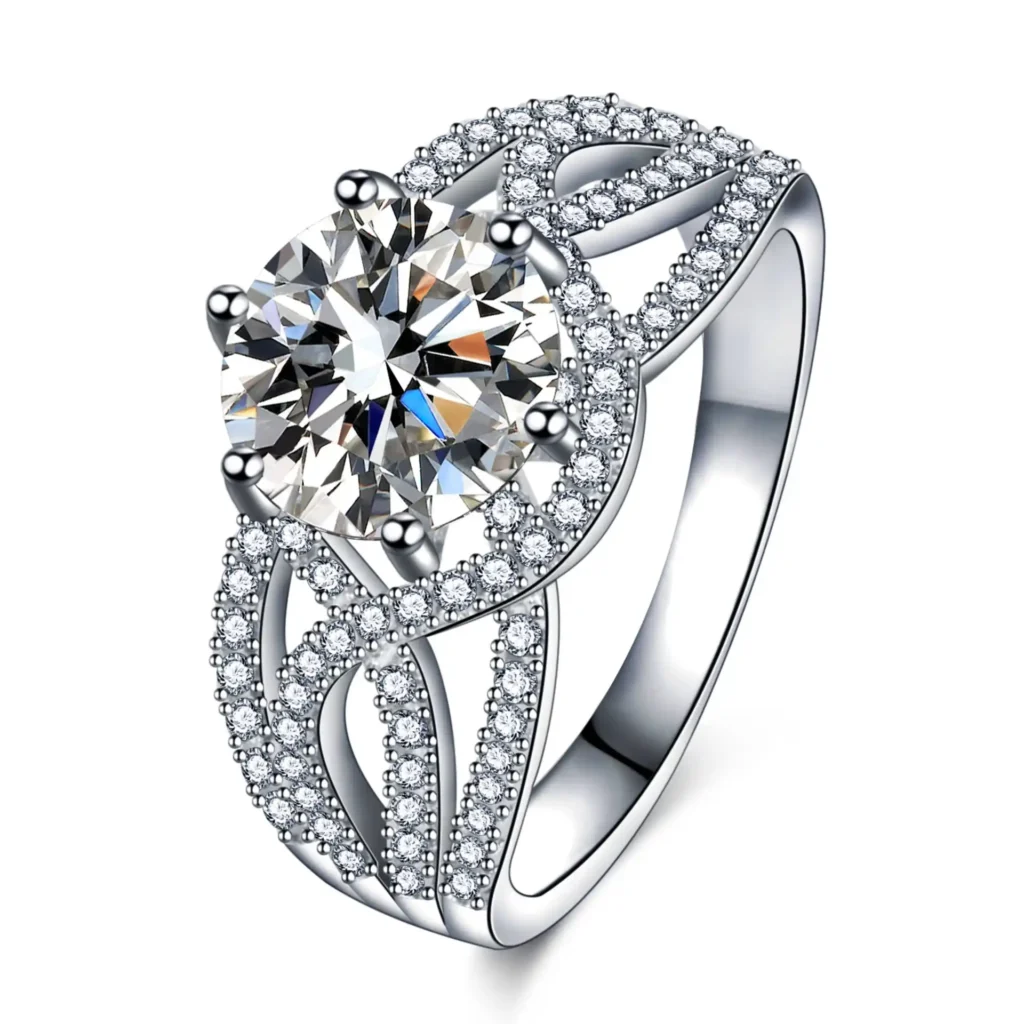
A diamond ring factory is a manufacturing facility that produces diamond rings and related jewelry products for brands, wholesalers, retailers, distributors, and other businesses.
Unlike a jewelry retailer, a factory focuses primarily on production. Depending on its capabilities, a professional factory may handle multiple stages of the manufacturing process internally or through an established production network.
These stages can include:
- Product design
- CAD development
- 3D modeling
- Prototyping
- Metal preparation
- Casting
- CNC machining
- Stone setting
- Polishing
- Engraving
- Quality inspection
- Packaging
- Bulk production
For business buyers, working directly with a factory can simplify communication and provide greater control over product specifications.
Instead of choosing only from a fixed catalog, buyers may be able to develop products based on their own designs, target customers, and price points.
Why Choose a Factory-Direct Diamond Ring Supplier?
Factory-direct sourcing can provide several benefits for jewelry companies.
The first is better control over manufacturing.
When a business works directly with the production facility, it can communicate specifications without relying on multiple intermediaries. This can make it easier to discuss changes to a design, materials, stone specifications, packaging, and production schedules.
The second benefit is potential cost efficiency.
Each additional intermediary in a supply chain may add a markup. Buying directly from a manufacturer can reduce some unnecessary layers between the factory and the final buyer.
The third benefit is customization.
A factory with OEM and ODM capabilities can create products specifically for a brand rather than simply supplying generic jewelry.
The fourth benefit is scalability.
As a jewelry company grows, its order volume may increase. A factory that can support both smaller production runs and larger wholesale orders can provide continuity throughout different stages of business development.
What Products Can a Diamond Ring Factory Produce?
A professional diamond ring manufacturer may produce a wide range of styles.
Solitaire Diamond Rings
Solitaire rings feature a central diamond and a relatively simple band. The design is popular for engagement rings because it creates a clean and timeless appearance.
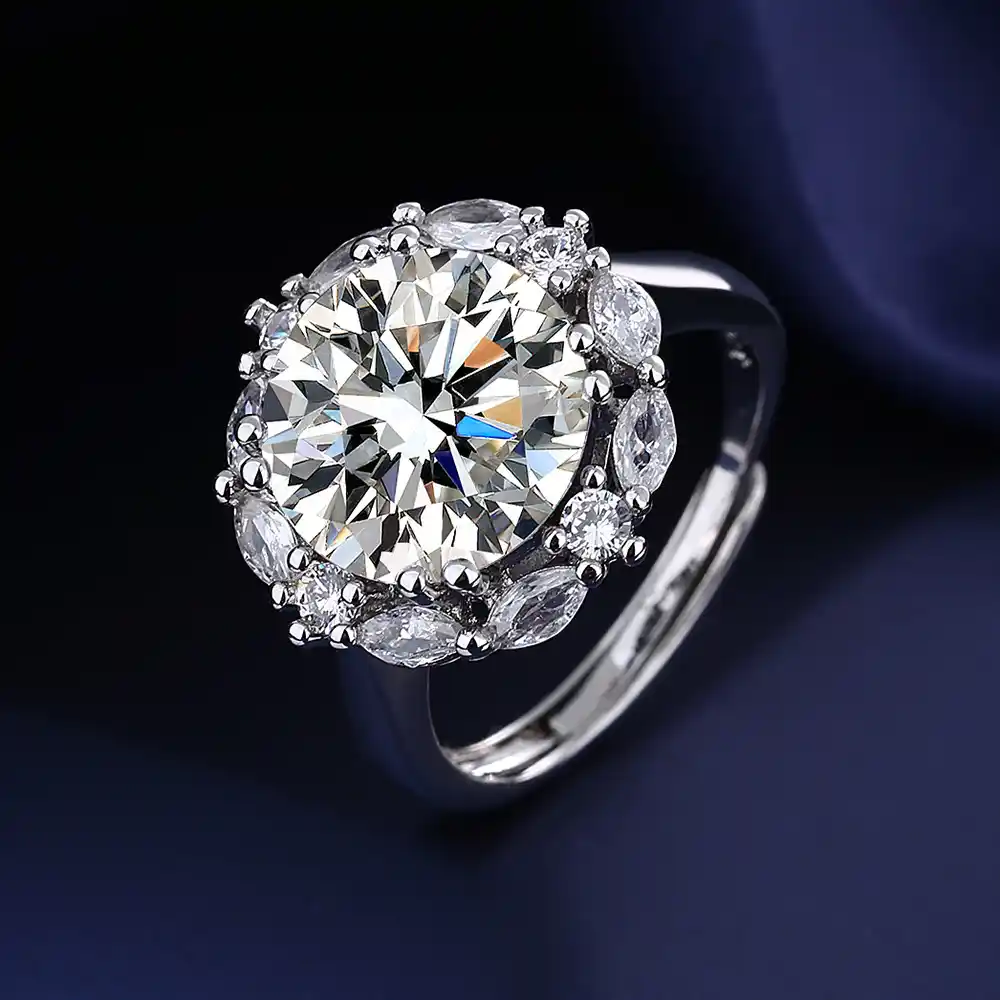
Halo Diamond Rings
Halo designs place smaller diamonds around the center stone. This style can create additional visual impact while providing more opportunities for customization.
Three-Stone Diamond Rings
Three-stone rings use a central stone accompanied by two additional stones. Different combinations of diamond shapes and sizes can create distinctive designs.
Pavé Diamond Rings
Pavé rings feature multiple small diamonds set closely together. These designs require precision because the stones must be positioned consistently.
Eternity Rings
Eternity rings feature diamonds or other gemstones arranged around much or all of the band. Manufacturing requires careful attention to stone size, spacing, and ring dimensions.
Custom Wedding Bands
Wedding bands can be produced in different metals, finishes, widths, and diamond configurations. Brands can develop matching sets for engagement rings and wedding bands.
A capable factory should be able to adapt production techniques to different designs rather than relying on a single manufacturing method.
How a Diamond Ring Is Manufactured
Understanding the production process can help buyers evaluate a factory more effectively.
Step 1: Product Development
The process begins with a product concept.
The buyer may provide a sketch, photograph, CAD model, technical drawing, or physical sample.
The manufacturer reviews the design and determines how it can be produced.
Step 2: CAD Modeling
A three-dimensional CAD model is created or refined.
CAD allows the manufacturer to examine the ring’s dimensions and structure before physical production.
For complicated rings, this step is particularly important because the design needs to balance appearance with structural integrity.
Step 3: Prototype Production
A sample is produced based on the approved CAD model.
The buyer can review the prototype and request modifications.
This is an important stage because changes are generally easier and less expensive before mass production begins.
Step 4: Casting or Precision Production
Once the sample is approved, the manufacturer begins production.
Depending on the design, different techniques may be used, including casting, machining, forming, and other precision manufacturing processes.
Step 5: Polishing
The ring surface is polished to achieve the desired finish.
Different products may require different surface treatments, including high polish, satin, brushed, matte, or mixed finishes.
Step 6: Diamond Setting
Diamonds are carefully positioned and secured into the ring.
Setting is one of the most important stages because the stones need to remain secure while maintaining the intended visual appearance.
Step 7: Final Finishing
Additional work may include cleaning, engraving, rhodium plating for certain white-gold products, surface inspection, and other finishing processes.
Step 8: Quality Inspection
Finished rings are inspected against the agreed specifications.
Quality control can include checking ring dimensions, diamond placement, stone security, polishing, engraving, and overall appearance.
Step 9: Packaging and Shipping
After final inspection, the products are packaged and prepared for delivery.
For private label customers, this stage may also include customized jewelry boxes, branded inserts, logos, and other packaging requirements.
How to Evaluate the Quality of a Diamond Ring Factory
A factory should be evaluated based on its complete manufacturing capabilities rather than a single product sample.
Examine Product Samples
Before placing a large wholesale order, request samples whenever possible.
Examine:
- Metal quality
- Ring weight
- Surface finishing
- Diamond setting
- Stone alignment
- Prong consistency
- Engraving
- Overall craftsmanship
A sample provides useful information about the factory’s actual production quality.
Review Manufacturing Experience
Ask how long the factory has been producing jewelry and what types of customers it serves.
Experience with international brands, wholesalers, retailers, and private label businesses can be valuable because these customers often require consistent specifications and repeat production.
Ask About Quality Control
A professional factory should have a defined inspection process.
Instead of relying only on a final visual check, quality should be monitored at different production stages.
Evaluate Communication
Clear communication is critical when manufacturing customized products.
The factory should be able to communicate specifications, revisions, sample requirements, production schedules, and shipping details clearly.
Check Production Capacity
A factory that produces excellent samples but cannot handle your expected volume may not be a suitable long-term partner.
Ask about production capacity and how the company handles larger orders during busy periods.
Wholesale Diamond Ring Manufacturing
Wholesale buyers often need to balance quality, price, minimum order quantity, and delivery time.
A good wholesale diamond ring supplier should be able to provide consistent products across multiple orders.
This is particularly important for retailers.
Suppose a retailer sells a particular engagement ring successfully and needs to reorder it several times throughout the year. If the manufacturer changes the ring dimensions, metal weight, diamond placement, or finishing between orders, the retailer may have difficulty maintaining consistent inventory.
For this reason, repeat-order consistency should be one of the key criteria when selecting a wholesale supplier.
How MOQ Affects Wholesale Jewelry Sourcing
MOQ, or minimum order quantity, is an important consideration for jewelry businesses.
Large wholesalers may be comfortable purchasing hundreds or thousands of units, while smaller brands may need only a limited quantity for initial testing.
Flexible MOQ can help smaller companies enter the market without investing heavily in inventory.
For example, a new jewelry brand may test ten or twenty designs with limited quantities. After identifying the strongest performers, the brand can increase production of those designs.
This approach allows purchasing decisions to be based on actual customer demand.
Incepto Jewel highlights flexible MOQ as part of its jewelry manufacturing service, making its production model suitable for businesses at different stages of development.
Natural Diamond and Lab-Grown Diamond Options
Modern jewelry brands have more diamond sourcing choices than ever before.
Natural diamonds remain an important category for traditional fine jewelry and luxury positioning.
Lab-grown diamonds have also become an important option for brands seeking alternative price points and product positioning.
A diamond ring factory that can work with both types of stones can provide greater flexibility when developing collections.
For manufacturers, stone selection should be considered together with ring design.
The size, shape, and proportions of the center diamond can influence the setting design. Therefore, it is usually better to confirm diamond specifications before finalizing the production model.
Why CAD Design Matters in Diamond Ring Manufacturing
CAD is one of the most valuable tools in modern custom jewelry production.
A CAD model allows the buyer and manufacturer to visualize the product before physical manufacturing.
It can help determine:
- Ring dimensions
- Stone position
- Band thickness
- Setting height
- Prong structure
- Diamond spacing
- Overall proportions
For brands with multiple product collections, CAD files can also make future modifications easier.
For example, a brand may want to offer the same ring design with a round diamond, oval diamond, and emerald-cut diamond. The manufacturer can modify the setting while maintaining the overall design language.
This makes CAD particularly useful for developing scalable jewelry collections.
Private Label Diamond Ring Production
Private label manufacturing allows a business to sell factory-produced jewelry under its own brand.
This can be especially attractive for online jewelry stores.
Instead of building a manufacturing operation, the brand can focus on customer-facing activities while the factory manages production.
Private label services may include:
- Custom ring designs
- Brand engraving
- Custom packaging
- Jewelry boxes
- Product inserts
- Branded labels
- Custom collections
The result is a product that can be presented as part of a unified brand rather than a generic wholesale item.
Incepto Jewel offers private label and OEM jewelry manufacturing services for businesses looking to create customized products and branded collections.
Custom Packaging for Diamond Jewelry
Packaging plays an important role in the customer experience.
A diamond ring is often purchased for an emotionally significant occasion, so presentation can influence the perceived value of the product.
Custom packaging may include:
- Branded ring boxes
- Velvet or leather-style interiors
- Logo printing
- Foil stamping
- Custom inserts
- Jewelry care cards
- Gift packaging
A manufacturer that can coordinate jewelry production and packaging can simplify the supply chain.
Incepto Jewel also provides custom jewelry box manufacturing services for brands that need customized presentation and packaging.
Questions to Ask Before Choosing a Factory
Before signing a manufacturing agreement, buyers should ask several practical questions.
Can you produce completely custom diamond ring designs?
Do you support OEM and private label production?
Can you create CAD designs from sketches or reference images?
What diamond options are available?
What metals can you manufacture?
What is your MOQ?
Can you produce samples before bulk orders?
How do you inspect stone-setting quality?
Can you maintain consistent quality for repeat orders?
Can you provide customized packaging?
What are your typical production lead times?
Can you ship internationally?
These questions can help buyers compare potential suppliers based on capabilities rather than price alone.
How to Build a Long-Term Relationship With a Diamond Ring Manufacturer
The most successful jewelry brands often treat manufacturing as a long-term partnership.
A good relationship begins with clear specifications.
Every project should define important details such as metal type, dimensions, diamond requirements, finishing, packaging, quantity, and quality expectations.
It is also helpful to establish an approval process.
The manufacturer should produce samples or prototypes before large-scale production whenever appropriate. Once a sample is approved, it can serve as a reference for future orders.
Over time, this creates a standardized production system that makes repeat ordering easier.
A long-term manufacturer can also become an important source of product development expertise. When the factory understands a brand’s design language and target customers, it can provide useful feedback on manufacturability, production efficiency, and new product concepts.
Why Factory Experience Matters
Diamond rings require precision.
A visually attractive design is not enough. The ring must also be practical to manufacture and durable enough for its intended use.
Experienced manufacturers understand how small changes in structure can affect production.
For example, changing band thickness can affect weight and comfort. Adjusting prong dimensions can affect stone security. Changing diamond size can require modifications to the setting.
This is why a manufacturer’s technical experience can be just as important as its equipment.
Final Thoughts
Choosing the right diamond ring factory is an important step for any jewelry business that wants reliable quality, competitive pricing, and scalable production.
The best manufacturing partner should offer more than bulk production. It should be capable of supporting product development, custom designs, OEM projects, private label collections, diamond setting, quality control, packaging, and international fulfillment.
For startups, flexible MOQ and custom development can make it easier to test new products. For established brands, consistent quality and production capacity become increasingly important. For wholesalers and retailers, dependable repeat production can help maintain a stable inventory.
When evaluating a factory, look at the entire manufacturing process rather than focusing only on the initial quotation. Product samples, CAD capabilities, material options, quality control, communication, production capacity, and customization services all contribute to the value of a manufacturing partnership.
For businesses looking for a reliable partner to develop custom diamond rings, wholesale diamond rings, OEM jewelry, or private label collections, Incepto Jewel offers manufacturing solutions designed for jewelry brands, retailers, wholesalers, and other professional buyers.
With the right factory behind your jewelry business, you can transform original designs into consistent products, develop a stronger brand identity, and build a more efficient supply chain for long-term growth.
Get a Quote Now