Choosing the right diamond ring manufacturer is an important decision for jewelry brands, wholesalers, retailers, designers, and online jewelry businesses. A supplier may offer an attractive price, but price alone does not determine whether a manufacturing partnership will be successful. Product consistency, customization capabilities, diamond setting quality, production capacity, communication, minimum order quantity, and delivery reliability can all affect the profitability of a jewelry business.
For companies planning to launch a new collection or expand an existing product line, selecting a manufacturer should be treated as a long-term sourcing decision rather than a simple purchasing transaction.
A professional diamond ring manufacturer should be able to help transform a design concept into a finished product while maintaining clear specifications throughout the manufacturing process. The ideal partner can also support samples, bulk production, private labeling, packaging, quality control, and repeat orders.
This guide explains the key factors B2B buyers should evaluate before choosing a diamond ring manufacturer.
1. Start With Manufacturing Capability
The first question to ask is simple: can the manufacturer actually produce the type of diamond rings your business needs?
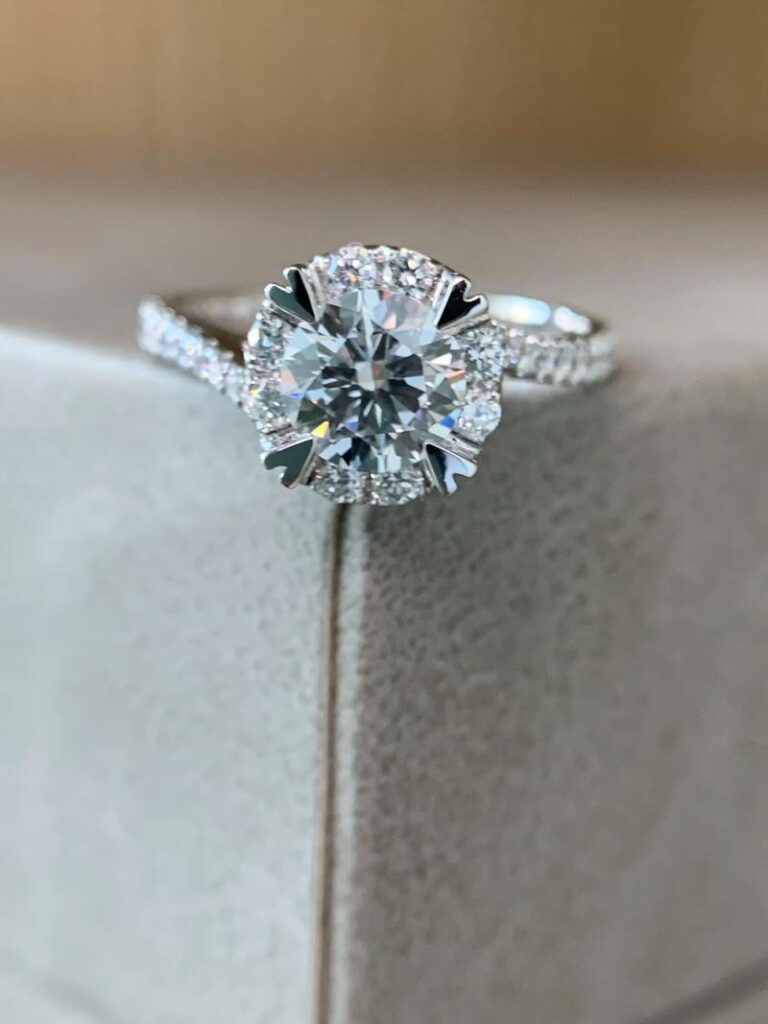
Diamond rings can range from relatively simple bands to highly detailed engagement rings containing multiple stones and complex settings. Different designs require different production skills.
A manufacturer may offer capabilities such as:
- Custom ring manufacturing
- Diamond setting
- Gold jewelry production
- Silver jewelry production
- CAD design
- 3D prototyping
- Lost-wax casting
- CNC processing
- Laser engraving
- Hand polishing
- Surface finishing
- Private label production
- Custom packaging
Incepto Jewel describes its manufacturing capabilities as covering custom jewelry production, diamond setting, gold and silver jewelry, custom rings, gemstone setting, and other jewelry categories. Its manufacturing process is designed to take products from concept and prototyping through production, packaging, and shipping.
For a buyer, this matters because a manufacturer with broader capabilities can potentially manage more stages of a project through one production partner.
2. Review the Manufacturer’s Custom Design Process
A strong custom diamond ring manufacturer should be able to work with different types of design information.
Some customers may have a professional CAD file. Others may only have a hand-drawn sketch, product photograph, or basic concept.
A capable manufacturer should have a process for turning these ideas into production specifications.
A typical development process may include:
- Design consultation
- Technical review
- CAD development
- Design optimization
- Prototype production
- Sample review
- Final approval
- Mass production
This process is valuable because jewelry design is not only about appearance. A ring must also be structurally suitable for manufacturing and comfortable for the intended wearer.
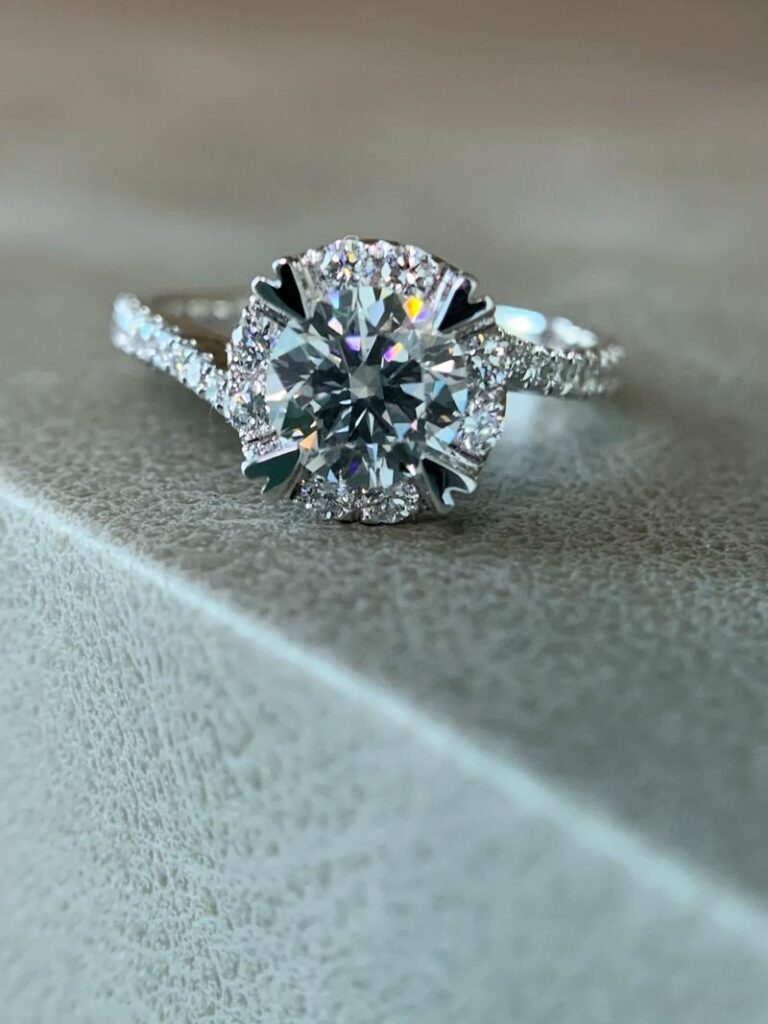
For example, changing the thickness of a band can affect its weight, proportions, comfort, and manufacturing cost. Adjusting a prong can affect the appearance and security of a center stone.
A manufacturer with experienced designers and engineers can identify these issues before production begins.
3. Ask for a Physical Sample
Never rely entirely on product images when evaluating a new manufacturer.
A physical sample provides much more useful information.
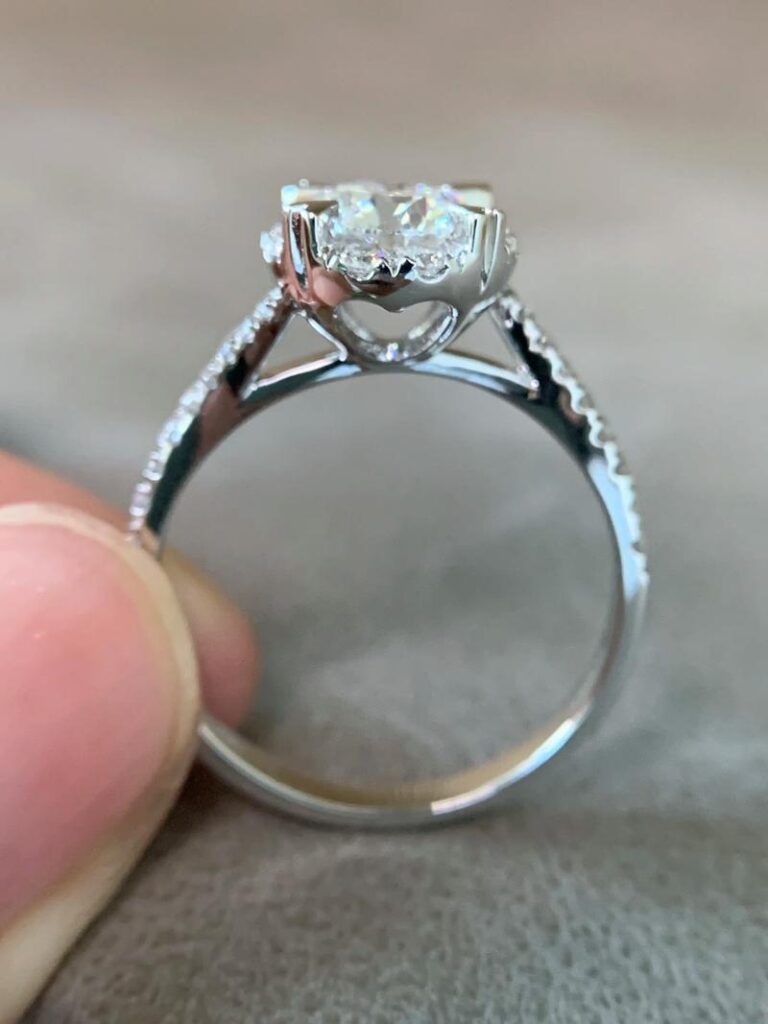
When reviewing a sample diamond ring, buyers should examine:
- Overall craftsmanship
- Ring dimensions
- Metal finishing
- Diamond alignment
- Stone security
- Prong quality
- Surface polishing
- Engraving accuracy
- Comfort
- Weight
- Packaging
A sample can also be compared with the original CAD design or product specification.
Incepto Jewel’s published production process includes prototype development followed by sample approval before mass production. The company explains that customers can evaluate the sample and request refinements before production proceeds.
This type of approval process is particularly useful for custom jewelry because it gives the buyer an opportunity to identify issues before committing to a larger order.
4. Evaluate Diamond Setting Quality
Diamond setting is one of the most important technical aspects of ring manufacturing.
A ring may have an attractive design, but poor stone setting can negatively affect both appearance and durability.
Common setting styles include:
- Prong setting
- Pavé setting
- Channel setting
- Bezel setting
- Halo setting
- Bar setting
- Three-stone setting
Each technique requires precision.
For a solitaire engagement ring, the center stone setting must be carefully aligned with the band and designed to support the stone securely.
For pavé rings, numerous small diamonds need to be positioned consistently.
For halo designs, the surrounding stones should form a balanced visual frame around the center stone.
When evaluating a manufacturer, buyers should ask how stone security is inspected and whether setting quality is checked before shipment.
Incepto Jewel’s published quality-control information includes stone security testing as one of its inspection steps.
5. Check Available Metal Options
The right metal can affect the appearance, durability, price, and target market of a diamond ring.
Common materials include:
- 10K gold
- 14K gold
- 18K gold
- White gold
- Yellow gold
- Rose gold
- Sterling silver
A flexible manufacturer should be able to produce different versions of a design according to the brand’s market positioning.
For example, a jewelry business could develop the same ring style in 14K yellow gold, 14K white gold, and 18K gold.
This allows the brand to create a broader product range without completely redesigning every product.
Incepto Jewel lists 925 sterling silver, 10K, 14K, and 18K gold among its manufacturing materials, along with natural diamonds, lab-grown diamonds, moissanite, cubic zirconia, and natural gemstones.
6. Understand Natural and Lab-Grown Diamond Options
When developing a diamond ring collection, buyers should determine whether the manufacturer can support the stone options required for their target market.
Natural diamonds remain an established choice for traditional engagement and fine jewelry collections.
Lab-grown diamonds provide another option for brands developing products for customers with different budget and product preferences.
A manufacturer that supports both can give jewelry brands greater flexibility.
The choice of diamond should be considered together with the ring design.
Different diamond shapes and sizes can require different settings.
Popular shapes include:
- Round
- Oval
- Cushion
- Emerald
- Princess
- Pear
- Marquise
- Radiant
- Asscher
A manufacturer should be able to adjust the ring structure according to the selected stone.
7. Compare MOQ Carefully
Minimum order quantity is an important consideration for jewelry businesses.
A large established retailer may be comfortable placing a substantial production order. A startup or independent designer may prefer a smaller initial batch.
A manufacturer with flexible MOQ can help brands test new products without purchasing excessive inventory.
For example, a startup might launch five custom diamond ring designs with limited quantities. After analyzing sales, the company can reorder the most successful designs in larger quantities.
This approach can reduce inventory risk.
Incepto Jewel states that it maintains a low MOQ to support businesses of different sizes and help reduce inventory costs and overstocking risks.
When comparing suppliers, buyers should therefore look at MOQ together with unit price rather than evaluating either number separately.
8. Consider Production Lead Time
Delivery time can have a direct impact on inventory planning.
A manufacturer should be able to provide a realistic production schedule based on the complexity and quantity of the order.
The process may involve separate timelines for:
- CAD design
- Prototype production
- Sample approval
- Material preparation
- Bulk manufacturing
- Quality inspection
- Packaging
- Shipping
Incepto Jewel states on its website that standard order turnaround is generally within 7–20 working days, with expedited options available for urgent orders. Its bracelet manufacturing page provides more detailed production estimates for CAD design, samples, and bulk manufacturing.
Buyers should confirm the actual lead time for their specific diamond ring project rather than assuming that every order will follow the same schedule.
9. Examine Quality-Control Procedures
A reliable manufacturer should have a defined quality-control system.
Quality inspection may include:
Raw Material Inspection
Materials should be checked before entering production.
Dimension Verification
The finished ring should match the approved specifications.
Stone Security Inspection
Diamonds and gemstones should be properly secured.
Surface Inspection
Polishing, plating, and other finishes should be checked for consistency.
Final Appearance Inspection
The completed ring should be compared with the approved sample.
Packaging Inspection
The jewelry should be safely packaged before shipment.
Incepto Jewel describes a multi-stage inspection process covering raw materials, dimensions, stone security, surface finish, plating, final appearance, and packaging.
For wholesale customers, consistent quality across multiple production batches is especially important.
10. Ask About Repeat-Order Consistency
A manufacturer may produce an excellent first sample, but the real test is whether it can reproduce the same product consistently.
This matters because jewelry brands often reorder successful products.
Suppose a retailer sells a particular engagement ring successfully. Six months later, the retailer orders the same model again.
The second batch should match the approved specifications as closely as possible.
Important elements include:
- Ring dimensions
- Metal specifications
- Diamond size
- Stone position
- Setting structure
- Surface finish
- Engraving
An established production record and approved sample can serve as an important reference for future orders.
11. Evaluate Private Label Capabilities
For jewelry brands, private labeling can be an important part of the manufacturing relationship.
A private label manufacturer may support:
- Logo engraving
- Brand marks
- Custom jewelry boxes
- Product tags
- Gift bags
- Instruction cards
- Retail packaging
Incepto Jewel states that its private label services can include custom logos, branded jewelry boxes, gift bags, product tags, instruction cards, and retail packaging.
This allows a business to build a consistent brand experience around its products.
For a diamond ring brand, the product and packaging should ideally communicate the same visual identity.
12. Look Beyond the Ring to Packaging
Diamond rings are often purchased for significant occasions, so packaging can influence the customer’s overall experience.
A professional jewelry box can protect the ring while also creating a stronger presentation.
Custom packaging options can include:
- Rigid ring boxes
- Magnetic boxes
- Drawer-style boxes
- Foldable gift boxes
- Travel jewelry cases
- Wooden jewelry boxes
- Custom inserts
- Velvet interiors
- Microfiber interiors
- Embossed logos
- Foil-stamped logos
Incepto Jewel also operates a custom jewelry box manufacturing service covering structural design, CAD engineering, material sourcing, branding, production, assembly, quality inspection, and export logistics.
For brands that want a complete private label solution, coordinating jewelry and packaging can simplify purchasing and product development.
13. Confirm Documentation and Compliance Support
International jewelry buyers may have specific documentation requirements depending on their market.
Before placing an order, ask the manufacturer what documentation can be provided for the materials and finished products.
Depending on the project and destination market, buyers may require documentation related to:
- Precious metal composition
- Material testing
- Nickel release
- Product compliance
- Third-party inspection
- Certificate of origin
Incepto Jewel states that it can provide relevant documentation based on customer and market requirements, including material certificates, precious metal test reports, nickel release compliance, REACH and RoHS documentation, SGS testing reports when required, certificates of origin, and third-party inspection support.
Buyers should confirm the exact documents needed for their market before production begins.
14. Consider the Manufacturer’s Production Scale
Production capacity becomes increasingly important as a jewelry brand grows.
A small startup may initially need only limited quantities, but successful products can eventually require regular bulk replenishment.
A manufacturing partner should ideally be able to support different production stages.
Incepto Jewel states that its factory has more than 5,000 square meters of production area, more than 100 skilled workers, and over 10 years of manufacturing experience. Its bracelet manufacturing page also lists a monthly production capacity of more than 100,000 bracelets.
These published figures are useful indicators of manufacturing scale, although buyers should still discuss the actual capacity available for their specific ring project.
15. Evaluate Communication Before Placing a Large Order
Communication is one of the easiest factors to overlook.
However, custom jewelry projects involve many decisions.
A manufacturer may need to confirm:
- Design details
- Ring sizes
- Metal specifications
- Diamond specifications
- Packaging
- Quantity
- Sample revisions
- Production schedule
- Shipping instructions
If communication is slow or unclear, small misunderstandings can become production problems.
A good manufacturer should provide clear answers and confirm important specifications before moving to the next stage.
16. Think About the Manufacturer as a Long-Term Partner
The best manufacturing relationship is usually not based on a single purchase.
A jewelry business may need to develop new products every season, replenish best-selling designs, modify existing collections, or introduce new materials.
A manufacturer that understands the brand can become more valuable over time.
After several successful projects, the factory may already understand the brand’s:
- Design preferences
- Quality expectations
- Packaging requirements
- Preferred materials
- Target price points
- Typical order quantities
- Production standards
This can make future product development faster and more efficient.
A Practical Checklist for Choosing a Diamond Ring Manufacturer
Before confirming a supplier, buyers can evaluate the following questions:
Does the manufacturer produce diamond rings directly?
Can it develop custom designs from sketches or CAD files?
Does it offer OEM and private label manufacturing?
Can it provide samples before bulk production?
What diamond and gemstone options are available?
What metals can it manufacture?
What is the minimum order quantity?
How long does production normally take?
What quality-control procedures are used?
Can the factory maintain consistency for repeat orders?
Can it provide custom packaging?
What documentation can it provide for international orders?
Can it support larger quantities as the business grows?
A manufacturer that can provide clear answers to these questions is generally easier to evaluate than a supplier that focuses only on price.
Why Incepto Jewel Is Worth Considering
For jewelry brands looking for a diamond ring manufacturer, Incepto Jewel positions itself as a custom jewelry manufacturing partner rather than simply a ready-made jewelry supplier.
Its website highlights custom manufacturing, OEM, ODM, private label, low MOQ, personalized support, prototype development, sample approval, mass production, packaging, and worldwide shipping. The company also lists diamond setting and custom ring manufacturing among its production services.
Its manufacturing pages further describe processes involving CAD design, prototype development, material confirmation, stone setting, polishing, quality inspection, and packaging.
For B2B buyers, the most important next step is to provide the manufacturer with a clear project brief covering the design, metal, diamond specifications, ring sizes, quantity, packaging, target market, and quality requirements.
Final Thoughts
Choosing a diamond ring manufacturer should involve much more than comparing quotations.
A reliable manufacturing partner should combine product development expertise, custom manufacturing capabilities, skilled diamond setting, quality control, flexible MOQ, realistic production schedules, private label support, and the ability to maintain consistent quality across repeat orders.
For startups, a flexible MOQ and sample-development process can make it easier to test new collections. For established jewelry businesses, production capacity and repeat-order consistency may become more important. For private label brands, packaging and branding capabilities can be essential to creating a complete customer experience.
The best approach is to evaluate the entire manufacturing process before placing a large order. Request samples, review quality, confirm specifications, understand lead times, and establish clear approval procedures.
With the right diamond ring manufacturer, a jewelry business can move more efficiently from design concept to finished product while building a more dependable supply chain for long-term growth.
For brands, wholesalers, retailers, and designers looking for custom or wholesale diamond ring production, Incepto Jewel provides a range of OEM, ODM, private label, and custom jewelry manufacturing services designed to support product development from concept through production and delivery.
